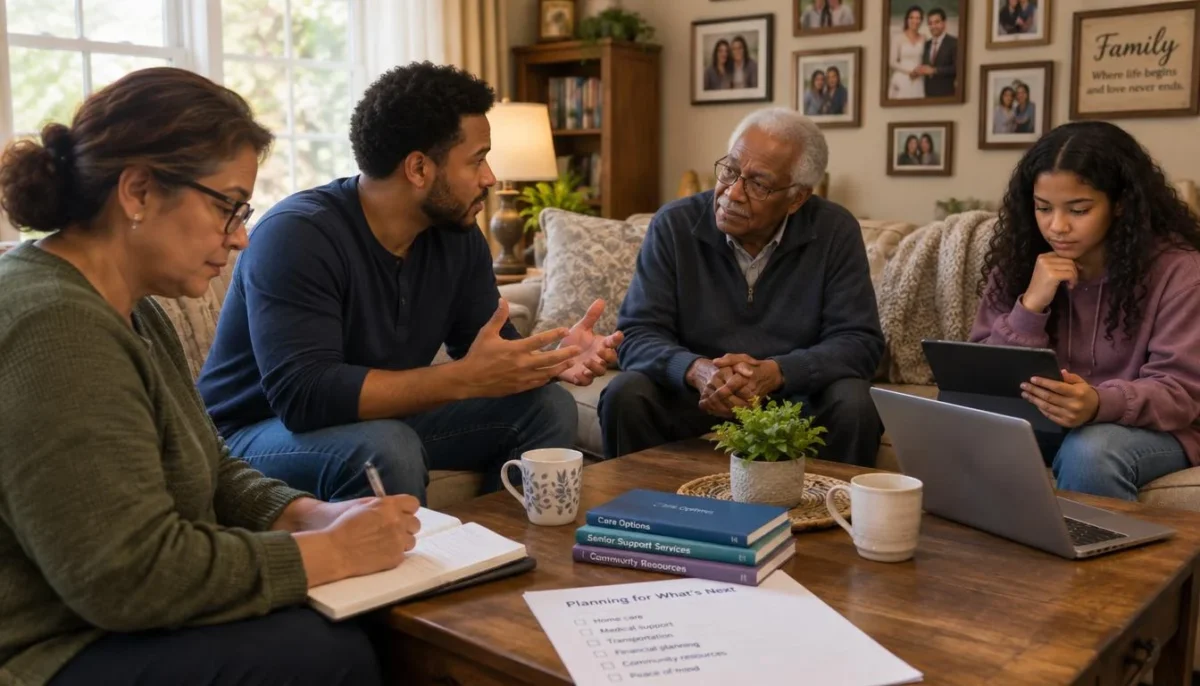
Home Health Care for Veterans in San Antonio: How VA Coverage Works

Leaving the Hospital in San Antonio? Your Home Health Discharge Checklist

Your veteran parent may now need reminders to take medicine or help getting dressed. For families caring for an aging veteran parent San Antonio, that change can raise questions about care, benefits, and family time. Start with what you see during ordinary days, rather than trying to solve everything at once.
Notice which daily tasks have become harder, then discuss support one step at a time. Balancing a parent’s changing needs, military-service-related benefits, and your own ability to help can feel difficult. Respite care is temporary care that gives a family caregiver time away from caregiving duties.
Key Takeaways
- Look for repeated changes in daily routines.
- Ask a clinician about medical concerns.
- Compare care options with your parent’s needs.
- Check VA and local support programs.
- Plan breaks for family caregivers.
Practical ways to recognize changes can help your family compare levels of care and decide what to explore next.
What Changes Suggest a Parent Needs More Help?

Your parent may need more help if routine tasks now require reminders or hands-on support. Patterns matter more than one difficult day when you assess daily function.
Write down changes over time and ask a clinician to assess medical concerns. A higher level of care may be needed if your parent cannot stay safe at home.
Family members can compare notes after visits or phone calls. Record what happened, when it happened, and what help made the task safer.
- Bathing or dressing now takes more help or raises safety concerns.
- Transfers from bed or chair, walking, or balance have changed.
- Meals are skipped, or your parent drinks less during the day.
- Medication routines are missed, repeated, or hard to follow.
- Memory, mood, or appointment management has changed.
These signs can point to different needs, so they do not settle the care decision by themselves. Discuss health changes with a clinician, especially after a fall or sudden decline.
Home-based support, assisted living, and skilled nursing serve different roles. Ask what each option can safely provide for your parent’s current needs.
| Option | Setting | Typical role or question to confirm |
|---|---|---|
| Home-based support | The veteran’s home | Help with daily routines; confirm whether needs are nonmedical or require skilled care |
| Assisted living | A residential community | Ongoing help with daily activities; confirm available care levels |
| Skilled nursing | A nursing facility | Nursing and clinical care; confirm whether the parent’s needs call for that level |
Care needs may shift, and a facility’s services can differ from another’s. Ask how well each setting fits the tasks your parent cannot manage safely.
Once your family has a clearer picture of daily needs, you can look into financial benefits and caregiver programs that may help.
Caring for Aging Veteran Parent San Antonio: Which Benefits Can Help?

Some veterans and surviving spouses may qualify for financial help through the VA. Eligibility depends on VA rules, including service, financial, and care-need requirements.
No benefit or approval is automatic. The U.S. Department of Veterans Affairs (VA) assesses each application under current program rules.
VA Aid and Attendance and pension questions
Aid and Attendance is an additional monthly VA pension benefit for eligible veterans or surviving spouses. It may help people who need assistance with activities of daily living.
The VA considers service and financial requirements, along with care needs and other rules. Check current criteria directly with the VA or an accredited representative before making plans around a benefit.
Keep benefit details separate from care decisions. A parent may need support even if a particular pension supplement does not fit their situation.
VA caregiver programs and family eligibility
Veteran benefits and caregiver programs are different pathways. The Program of Comprehensive Assistance for Family Caregivers (PCAFC) is one VA program families can ask about.
Caregiver program eligibility is not automatic. Ask the VA about current requirements, available training and support, and respite options for family caregivers.
Prepare key records before contacting the VA. Confirm the agency’s current application requirements before submitting documents.
- Military service and discharge records.
- Current care needs, including tasks that require help.
- Medical contacts, such as the parent’s clinician.
- Income and asset information.
- Existing benefit notices.
Families often ask what disqualifies someone from being a caregiver. The answer depends on the paid role or benefit program; there is no single rule for every caregiver.
These federal benefit pathways are one part of the picture. San Antonio-area organizations can also help families find services and navigate support.
Which San Antonio Resources Support Veterans and Caregivers?
San Antonio families can contact separate local programs for caregiver support, veteran-benefit navigation, and facility advocacy. Choose by need, so your first call goes to the right kind of help.
AACOG and its partner programs connect families with local information and services. Their roles range from caregiver training to help raising concerns about residential care.
AACOG caregiver support and Alamo Service Connection
The Alamo Area Council of Governments (AACOG) caregiver support program serves caregivers who assist older adults age 60 or older. The older adult must be frail, have a disability, or have a chronic illness; caregivers may be any age.
Services include information and assistance, support groups, training, and respite. Limited extra services may include chore maintenance, residential repair, emergency response systems, and mental health counseling.
Call Alamo Service Connection at 866-231-4922 or 210-477-3275 to ask about available support. Staff can help families find information that fits their situation.
Alamo Veterans Network benefit navigation
The Alamo Veterans Network connects veterans with healthcare, housing, employment, and financial support. It can also help people navigate VA claims, medical care, and mental health services.
For information, call (888) 724-8387 or email avn@aacog.gov. The network can help families identify a useful next step without replacing the U.S. Department of Veterans Affairs.
Ombudsman and Senior Companion options
Long-term-care ombudsmen listen to residents’ concerns, explain resident rights, and support resident-directed care. For Bexar County, call 210-362-5236 or email Bexar.Ombudsman@aacog.gov.
For the Alamo Region, call 210-362-5283 or email Alamo.Ombudsman@aacog.gov. Residents or family members can raise concerns about care and ask about rights.
The Senior Companion Program serves adults age 60 or older. Volunteers must be at least 55 and meet income eligibility requirements.
Senior Companion volunteers may help with errands, light chores, walking, games, mail, and phone calls. Volunteers receive a stipend, mileage reimbursement, and training.
Choose the resource that matches your immediate question, then consider practical steps for arranging in-home care.
How Can Families Set Up In-Home Care and Respite?
Turn “Mom needs more help” into a short plan for specific tasks, days, and safety concerns. Clear details help your family discuss what support would make daily life easier.
Build the plan around your parent’s needs and preferences, then review it as those needs change. In-home services can support daily routines, though each provider sets its own service options.
Match tasks and schedules to actual needs
Write down the tasks that need help and the schedule your parent prefers. Include safety concerns, communication preferences, and changes that should trigger a review.
Ask a provider about staff qualifications and the services staff can perform. Confirm backup coverage, scheduling rules, and how the family will receive updates.
Possible nonmedical tasks include companionship, meal preparation, light housekeeping, medication reminders, transportation, and errands. Availability varies by provider, and skilled medical needs require an appropriately qualified clinician.
A useful schedule names the task and time, rather than saying “check in often.” For example, note that someone should help prepare lunch on weekdays if that is the specific need.
Build respite and respectful communication into the family plan
Respite care gives a family caregiver planned time away, whether for regular breaks or a temporary need. Add backup arrangements and the caregiver’s own rest to the care plan.
Talk with your parent about what help feels acceptable. Respectful words can keep a hard conversation focused on choices, safety, and the parent’s wishes.
There is no universal list of twelve forbidden phrases, but these examples can sound dismissive or controlling. The alternatives invite your parent into the conversation.
- “You’re fine” / “What feels difficult right now?”; “You’re too old for that” / “Would you like help making it safer?”; “You don’t understand” / “Let me explain, then hear what you think.”
- “You’re being difficult” / “What matters most to you here?”; “You have to move” / “Can we look at the options together?”; “I know what’s best” / “Let’s decide with your preferences in mind.”
- “You already told me that” / “I’m listening”; “Stop worrying” / “What is worrying you most?”; “You can’t do that anymore” / “What support would make it possible?”
- “You’re a burden” / “I want us to find help that works for everyone”; “Just take your medicine” / “Would a reminder or routine help?”; “You’re acting like a child” / “I want to understand what you need.”
Give your parent time to answer, even when a decision feels urgent. Ask what they want to keep doing and where help would feel useful.
Clear expectations and regular check-ins help families adjust support as needs change.
Conclusion
A veteran parent’s care needs and a family’s capacity can change over time. Revisit the care plan when daily routines shift, and treat questions or respite as reasonable next steps.
Contact Continu Care Home Health to learn about in-home care services or schedule a consultation for yourself or a loved one. Continu Care Home Health proudly serves patients and families throughout San Antonio and surrounding areas with compassionate, professional care delivered in the comfort of home.
Continu Care Home Health, (210) 734-6166, 3201 Cherry Ridge C319, San Antonio, TX 78230. Call us if you need any help.
This arctcle is not medical advice. Please contact your Doctor before inplementing anythnig covered in this post.