
Fall-Proofing Your San Antonio Home: A Room-by-Room Checklist
Aging in Place: Smart Home Modifications for San Antonio Seniors
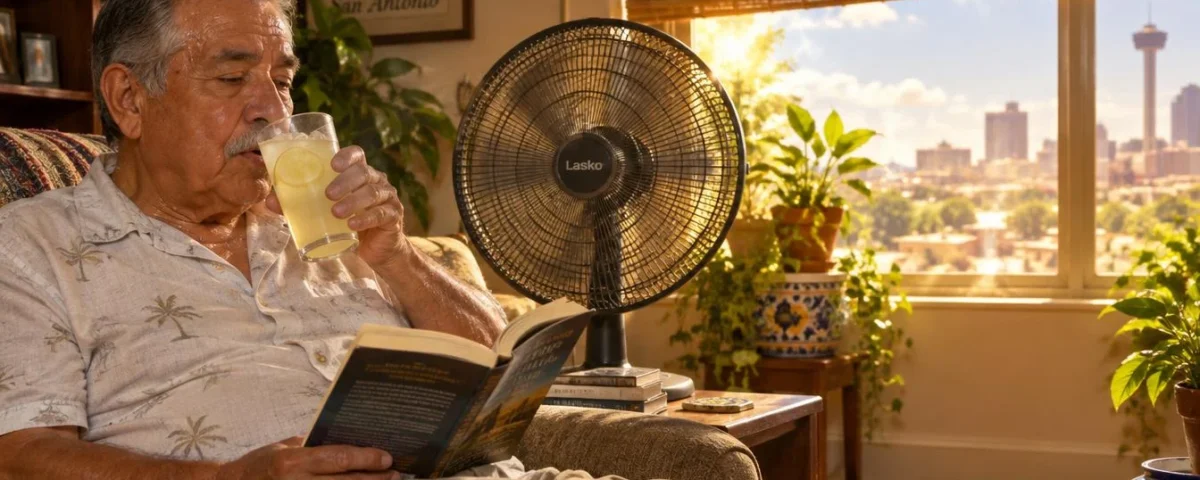
On a hot San Antonio afternoon, an older adult sits alone while the house slowly warms. Heat safety for seniors San Antonio families can plan for matters because extreme heat can lead to heat illness and dehydration.
The heat index is the temperature the body feels when heat and humidity are combined. Planning for home cooling, water, and regular check-ins can make hot days safer, even when temperature changes catch a family off guard. This information offers general safety tips, not personal medical directions.
Key Takeaways
- Keep the main living area cool during hot weather.
- Offer water regularly, following any fluid limits from a clinician.
- Plan a cool place to go if home air conditioning fails.
- Shift outdoor plans away from the hottest hours.
- Check in often with older adults who live alone.
These steps matter because heat can affect older adults differently, and age may make the body less able to cool itself.
Why Are Older Adults More Vulnerable to Heat?
Older adults can be more vulnerable because the body’s cooling and thirst responses may become less effective with age. Less sweating and weaker thirst cues can make it harder to shed heat or notice dehydration early.
Adults 65 and older face higher risk on days with high temperatures and heat indexes. A person may need support even before feeling very thirsty or overheated.
How aging changes the body’s cooling response
With age, the body may sweat less and send less blood flow to the skin. Both changes can limit the body’s ability to release heat. Thirst can also become a less reliable cue to drink.
There is no single deficiency that explains heat intolerance for everyone. Medical conditions and medication effects are among the possible causes to discuss with a clinician.
Health conditions and medications that can add risk
Heart disease and other existing health conditions can raise heat risk. Living alone or not having air conditioning can also make it harder to stay safe, especially during a long hot spell.
Diuretics, beta-blockers, calcium channel blockers, anticholinergics, ACE inhibitors, ARBs, antipsychotics, and some mood stabilizers may affect temperature control or hydration. Effects vary by person and drug. Do not stop or change a prescription without speaking with a physician or pharmacist.
Fitness may help with some physical activity, but it does not remove heat risk from age, illness, medication, or exposure. Use a practical response for each risk, rather than assuming fitness alone protects someone.
| Factor | How it may affect heat safety | Practical response |
|---|---|---|
| Aging changes | Less sweating and weaker thirst | Offer water and check for heat strain |
| Health conditions | Heart disease may add heat risk | Ask a clinician about personal precautions |
| Medications | Some affect cooling or hydration | Review prescriptions with a pharmacist |
Personal risks are only part of the picture. The home environment, especially access to cooling, can reduce time spent in dangerous heat.
What Does Heat Safety for Seniors San Antonio Look Like at Home?

Aim for an indoor temperature of 78°F or lower during hot weather, when that setting is comfortable and practical. Above 80°F can be risky for older adults, so check the home before the hottest part of the day.
Use a thermometer in the main living area, where an older adult spends much of the day. A thermostat in a hallway may not show how warm a sunny room or bedroom gets.
Keep indoor spaces cool
Test the air conditioning before summer heat peaks. Replace its filter as directed, and arrange repairs if the system does not cool the home well.
Fans can help circulate air when a room is warm, but they are not a substitute for air conditioning during extreme heat. Close blinds or curtains on sun-facing windows, especially during the afternoon.
Check San Antonio weather along with the heat index in San Antonio. The heat index combines heat and humidity, and high humidity can make it harder for sweat to cool the body.
When the air feels heavy, a shaded room may still feel uncomfortable. Keep the living space cool and have a way to check its temperature during the day.
Make a backup plan for cooling
Choose a backup place before the home gets too warm. Libraries and community centers may offer a cool place to sit, read, or wait out the hottest hours.
Identify cooling centers in San Antonio near the older adult’s home, then check current hours and access before relying on one. Keep the address and a ride plan where family members can find them.
Ask a trusted neighbor or relative whether they can help with a ride if the air conditioning fails. A backup plan works best when the older adult knows who to call and where to go.
A prepared home and a nearby backup place reduce heat exposure. Daily habits can also help limit dehydration and outdoor strain.
What Daily Habits Help Older Adults Stay Safer in Hot Weather?
Older adults should drink regularly rather than wait to feel thirsty. About 8 cups, or 64 ounces, of water each day is a common starting point, not a rule for everyone.
Follow any fluid limits or hydration advice from a physician. Needs vary, especially for people with fluid restrictions or other health conditions.
Use this short routine to plan a hot day, including periods of excessive heat in San Antonio:
- Offer water regularly instead of waiting for thirst.
- Ask a physician about fluid limits or medication-related hydration advice.
- Choose light-colored, loose-fitting clothing.
- Move errands and outdoor activity to early morning or evening.
- Use shade and sun protection, and take frequent cool-down breaks.
The hottest part of the day is often between 11 a.m. and 4 p.m. Schedule a pharmacy trip or walk earlier when possible, and choose a cool indoor option if the afternoon is already hot.
Light clothes and a shaded rest stop can help during a necessary outing. Bring water and plan a place to cool down before leaving home.
Extreme heat safety for seniors in San Antonio includes changing plans when temperatures or heat advisories make outdoor activity unsafe. A canceled errand is safer than pushing through dangerous conditions.
Prevention can reduce exposure, but symptoms still need attention. Knowing the warning signs helps families act quickly when someone becomes ill.
How Can Families Recognize Heat Illness and Respond?
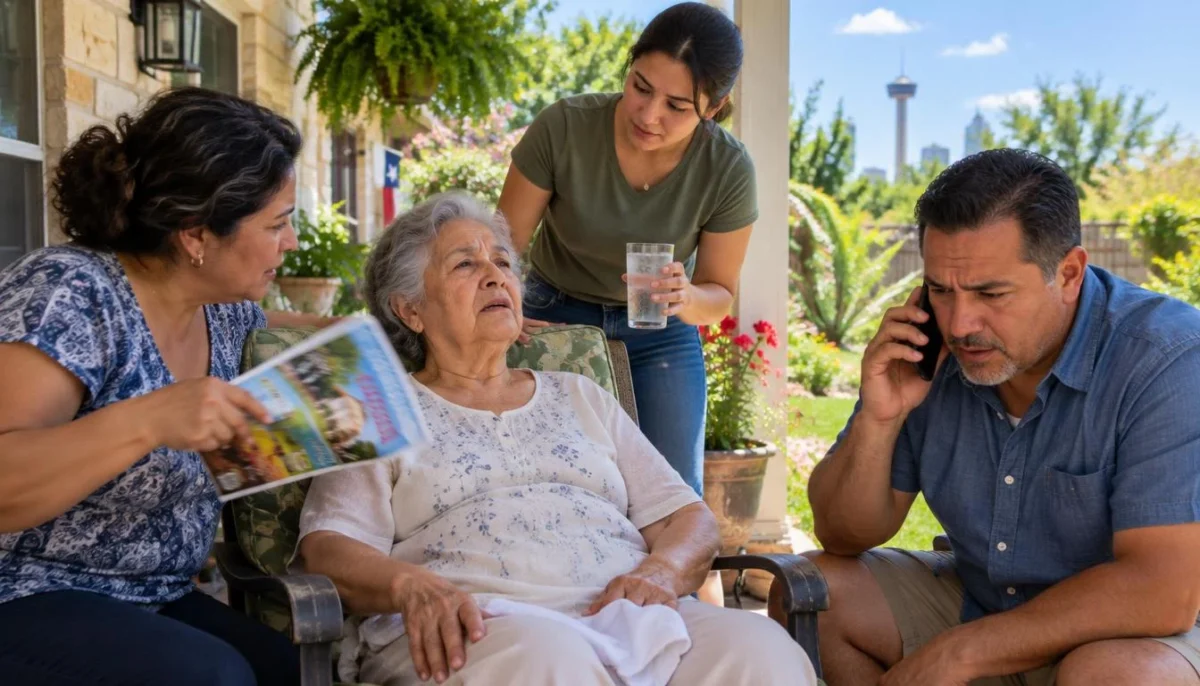
Sudden confusion or unusual behavior in hot weather can be a heat emergency, not just a bad day. Heat stroke can cause a body temperature of 103°F or higher and needs immediate emergency care.
Heat stroke is an emergency requiring 911, while heat exhaustion calls for cooling and medical attention if symptoms persist or worsen. Act quickly when warning signs appear.
Spot cramps and heat exhaustion early
Heat cramps may cause painful muscle spasms and heavy sweating. Heat exhaustion can bring heavy sweating, cool or clammy skin, weakness, dizziness, nausea, headache, or a fast, weak pulse.
For suspected heat exhaustion, move the person to a cooler place and loosen clothing. Offer small sips of water only if the person is alert and able to swallow.
Seek medical attention if symptoms are severe, worsen, or do not improve. Do not leave someone who feels faint or confused alone while arranging help.
Treat suspected heat stroke as an emergency
Heat stroke warning signs can include hot, red, moist or dry skin, no sweating, or a strong rapid pulse. A slow, weak pulse, nausea, confusion, unusual behavior, slurred speech, fainting, or seizure can also occur.
Call 911 immediately if you suspect heat stroke. Move the person to a cooler place and cool them with damp cloths or cool water while waiting. Do not delay emergency care.
| Condition | Possible signs | Immediate action | Urgency |
|---|---|---|---|
| Heat cramps | Painful muscle spasms, heavy sweating | Rest in a cool place; offer water if safe | Watch closely; get help if symptoms worsen |
| Heat exhaustion | Weakness, dizziness, nausea, clammy skin | Cool the person; offer small sips if alert | Seek care if severe, worsening, or persistent |
| Heat stroke | Confusion, seizure, very hot skin | Call 911; cool with damp cloths or water | Emergency; do not delay help |
Knowing how to respond is important during a heat event. A clear family plan and regular check-ins can help someone who may be alone.
How Can Families Prepare for Heat Advisories and Power Outages?
An air conditioning failure during a heat event can make a home unsafe as indoor temperatures rise. Prepare before a failure by choosing a cool place and agreeing on who will help.
Keep water and nonperishable food for at least 72 hours in an emergency kit. Add the other supplies the older adult may need to stay safe and connected.
- Pack water, nonperishable food for at least 72 hours, medications, and a written list of dosages.
- Store flashlights and extra batteries where family members can find them.
- Keep a phone charger or backup power for essential medical devices.
- Write down a cool place to go if air conditioning stops working.
Agree who will check in and how the family will reach each other if phones fail. A neighbor or relative checking more often is especially useful when an older adult lives alone.
Check local forecasts and see whether a heat advisory in San Antonio or an excessive heat warning today is in effect. Adjust plans as conditions change, rather than relying on yesterday’s forecast.
Keep the backup location, contact names, and ride plan in one easy-to-find place. That makes it simpler for a family member to help when the home loses cooling.
Families can also arrange trusted in-home support for daily routines and check-ins when extra help would make hot days safer.
Conclusion
Planning ahead can help older adults stay safer through San Antonio’s hot days. Keep a cool place available and set regular check-ins with family or a trusted neighbor.
Continu Care Home Health proudly serves patients and families throughout San Antonio and surrounding areas with compassionate, professional care delivered in the comfort of home.
Contact Continu Care Home Health to learn about in-home care services or schedule a consultation for yourself or a loved one. Continu Care Home Health, (210) 734-6166, 3201 Cherry Ridge C319, San Antonio, TX 78230. Call us if you need any help.
This arctcle is not medical advice. Please contact your Doctor before inplementing anythnig covered in this post.