
Recovering From Surgery at Home Instead of a Facility

Preventing Infection: Wound Care Tips After Surgery in San Antonio

Your journey after joint surgery begins the moment your doctor clears you to leave the hospital. Most patients stay in the hospital for 1 to 2 days following the procedure, depending on mobility and pain goals. Continu Care Home Health helps you make the transition with a dedicated team focused on safety and comfort.
Daily therapy and clear guidance speed your healing. Physical therapy exercises, pain management, and careful planning for activities protect your new joint. Our staff teaches practical ways to move and live while you regain strength and confidence.
The process takes time, but with professional care and a strong support team, you can return to favorite activities with less stress. Trust your doctor, follow the therapy plan, and lean on trained caregivers to make this a safe, effective recovery.
Key Takeaways
- Hospital stays usually last 1–2 days after surgery.
- Continu Care Home Health offers a skilled team for a safe transition.
- Physical therapy and daily exercises are vital to heal well.
- Pain control and home setup protect your new joint.
- Follow your doctor’s plan to return to activities with confidence.
Preparing Your Home for Hip Replacement Recovery
Before you come home, plan simple changes that make daily life safer and easier. Continu Care Home Health recommends you organize essential areas so you move less and rest more during early healing.
Setting Up a Recovery Center
Choose one level of your residence for sleeping, bathing, and eating so you avoid stairs while you are weak. Arrange your bed so your feet touch the floor when you sit on the edge. Place a table nearby to keep essentials within reach.
Managing Household Tasks
Remove loose rugs and tape down cords to cut fall risk when you walk with a walker or a cane. Install a raised toilet seat and grab bars in the shower. You may need to set aside one day to prepare and freeze meals for easy access to nutrition.
- Make sure critical items are reachable without bending.
- Keep mobility devices and shoes by the door for quick access.
- Continu Care Home Health caregivers can help identify hazards and offer hands-on help.
| Area | Action | Why it matters |
|---|---|---|
| Bedroom | Set bed height and clear path | Improves stability when sitting and standing |
| Bathroom | Raised toilet seat, grab bars, non-slip mat | Reduces bending and slipping during transfers |
| Living space | Remove rugs, keep table with essentials | Limits reaching and tripping while you heal |
| Entryway | Store walker or cane near exit | Easy access for short walks and appointments |
Understanding Hip Replacement Recovery at Home
Understanding what to expect after total hip care helps you plan the first crucial weeks following surgery. Most people leave the hospital within 24–48 days after their procedure, and the real healing happens after you return to your living environment.
Continu Care Home Health emphasizes that clear knowledge of the process improves outcomes for total hip replacement. Your doctor will track healing, check your incision, and manage pain so you progress safely.
The first few weeks after surgery are a critical time for the new joint. Our health care team gives step-by-step guidance, coordinates with your medical providers, and adjusts plans as your strength grows.
- Expect professional support for wound care, medication review, and mobility guidance.
- We help you follow the replacement surgery plan so you regain independence sooner.
- Proper education about the procedure and follow-up care reduces complications and builds confidence.
Managing Wound Care and Medications
Keeping your wound clean and your medications on schedule protects your progress after surgery. Continu Care Home Health helps you follow clear steps for incision care and safe pain control during the first weeks.
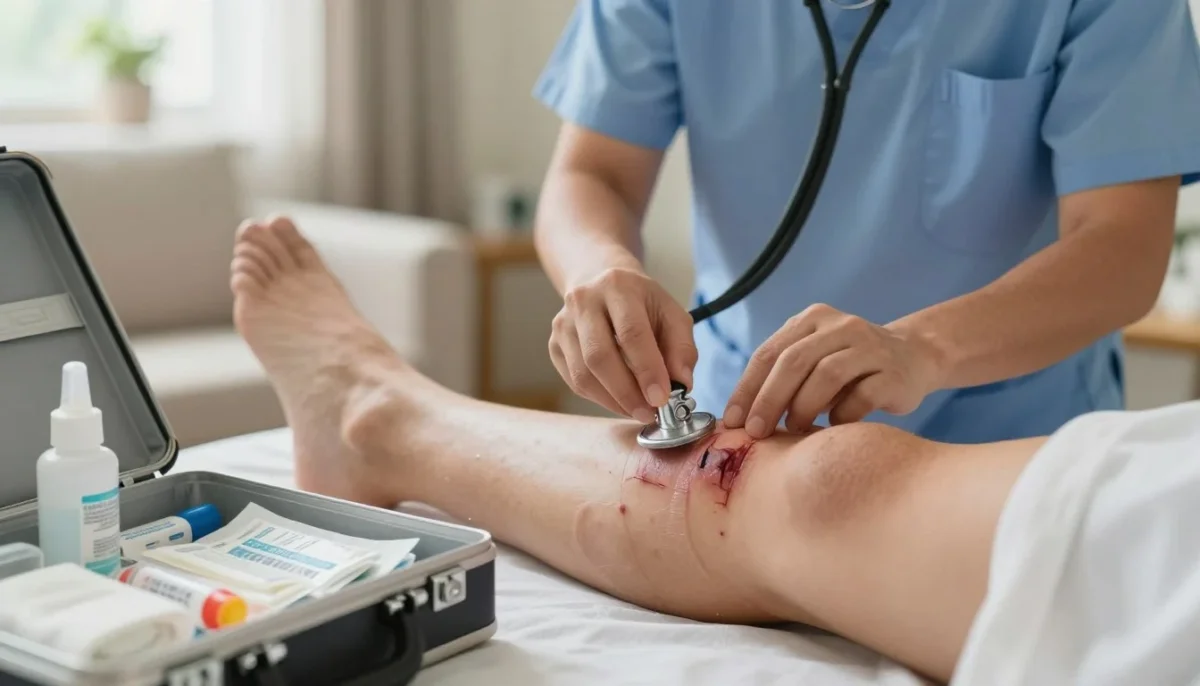
Incision Care Guidelines
Monitor the incision daily. Our team will help ensure it stays clean and dry and will look for redness, drainage, or swelling.
You may need to elevate your leg to lower swelling. Protect the incision while you shower by following the surgical team’s directions given at hospital discharge.
Medication Management
Your doctor may prescribe medicines to control pain and prevent infection. Take pills on the schedule we set to avoid gaps in pain control.
- We assist you with on-time doses and track side effects.
- Gentle exercises we teach improve blood flow to your knee and leg and lower clot risk.
- If you notice changes in the incision, contact your doctor immediately.
| Task | Who Helps | Why It Matters |
|---|---|---|
| Daily incision checks | Continu Care Home Health team | Detects early signs of infection |
| Pain medication schedule | Doctor + nursing staff | Maintains comfort for activities and exercises |
| Leg elevation guidance | Caregiver and therapist | Reduces swelling and improves mobility |
| Shower protection plan | Surgical team instructions | Keeps incision dry during the first days |
Essential Safety Modifications for Your Bathroom
A few focused bathroom changes cut your risk of slipping and protect your new hip during daily care.
Continu Care Home Health experts recommend you make sure your bathroom has non-slip mats to prevent dangerous falls.
Install grab bars at a level that lets you steady yourself when using the toilet or getting into the shower. Remove all loose rugs so you do not risk tripping near wet floors.
Your doctor may suggest a shower chair to keep your leg and knee in a safe position while you bathe. Make sure personal items sit within reach so you do not bend or twist your incision.
Protecting your new hip requires constant vigilance, especially in wet areas where slipping risk rises. Our team can evaluate the space and recommend changes that fit your needs.
- Non-slip mats: reduce falls in shower and near the toilet.
- Grab bars: placed at a comfortable level for transfers.
- Shower chair: supports safe bathing and keeps the leg stable.
- Remove rugs: eliminate loose edges that can catch a foot.
By making these modifications you build a secure space that supports independence and protects your new hip from injury. Continu Care Home Health will help you make sure each change meets safety standards.
Physical Therapy and Mobility Exercises
A steady therapy plan turns small motions into meaningful progress each week.
Home Exercise Programs
Continu Care Home Health provides a physical therapist who visits you and shows safe, targeted exercises. These sessions focus on strengthening the leg and joint while keeping pain controlled.
Your program includes practice for stairs and instruction on assistive devices like a walker or cane. Your therapist teaches proper form and reminds you not to bend the new hip past 90 degrees in early weeks.
- Follow the time-based goals your doctor sets to protect flexibility and build strength.
- We monitor pain during each session so exercises stay helpful, not harmful.
- Regular physical therapy and consistent exercises improve walking, balance, and daily function over time.
Stick with the plan. Small, steady work guided by a therapist helps your total hip replacement function as intended and reduces complications.
Navigating Daily Activities and Lifestyle Changes
Continu Care Home Health helps you adapt daily routines so you remain safe during the first weeks after surgery.

Your physical therapist will guide when to resume driving, return to work, and move from a walker to independent walking. They watch how your leg and knee respond to activity and adjust therapy so pain stays manageable.
Follow your doctor’s advice on sleeping positions and limits for strenuous tasks. You may need to build short rest periods into each day to give the body time to heal.
- We help you plan safe chores and pacing for daily activities.
- Your therapist sets goals for exercises and physical therapy that fit your progress.
- Continu Care Home Health supports the transition after replacement surgery so you feel confident in your living space.
Stick with the plan. By following your team’s guidance, you can return to normal life with greater ease and less worry.
Important Precautions for Your New Hip
Protecting your implant starts with simple habits you use every time you stand, sit, or walk. Follow clear rules for the first 6 to 8 weeks after surgery so your joint heals as expected.
The Dos of Safety
Make sure you keep your leg facing forward when sitting or standing. Use a raised seat or bed to avoid bending too far.
Make sure to use ice packs wrapped in a towel to control pain and reduce swelling around the incision.
The Don’ts of Safety
Do not cross your legs or bend at the waist beyond 90 degrees. These moves can risk dislocation and harm the joint.
Your doctor will give a personalized list of dos and don’ts. Follow that guidance for healing and long-term function.
Avoiding Falls
Clear walkways and keep the toilet and shower area free of obstacles. Use your assistive device every time you walk until your therapy team says otherwise.
- Continu Care Home Health reminds you to make sure precautions are followed for 6 to 8 weeks after surgery.
- Continue your prescribed exercises but stop if you have severe pain and call your doctor.
Recognizing Warning Signs of Complications
Knowing which symptoms need immediate attention helps you act fast and protect your health.
Contact your doctor right away if you have a persistent fever over 100 degrees Fahrenheit after your surgery. A higher temperature can mean an infection that needs prompt treatment.
Watch your incision for increased redness, swelling, or any new drainage. These signs require medical review to prevent wound problems.
- Leg pain: Severe, unexplained pain in your leg may signal a blood clot. Our team monitors this risk.
- Breathing or chest changes: Sudden chest pain or shortness of breath is an emergency—seek immediate care.
- Pain patterns: Your physical therapist and therapist will help you spot abnormal pain that could indicate an issue with your new joint.
Continu Care Home Health gives you the education and support to notice these red flags. Keep open lines of communication with your medical team so problems are handled quickly.
Early recognition of warning signs protects your long-term outcomes after replacement surgery and helps ensure the success of your total hip procedure.
Conclusion
Small, consistent steps guided by professionals help you regain strength and confidence after surgery.
Stick with your therapy plan and attend follow-up visits. Gentle progress, safe movements, and regular check-ins help protect your new implant and speed functional gains.
Lean on trained caregivers for early tasks and ask for help with bathing, dressing, and medication when you need it. Good support reduces stress and keeps you on track.
Recovering from this procedure needs patience, professional care, and a clear plan. Continu Care Home Health can provide skilled visits and tailored services to support your goals.
This arctcle is not medical advice. Please contact your Doctor before inplementing anythnig covered in this post.
Contact us to learn more or schedule a consultation. Continu Care Home Health proudly serves San Antonio and nearby areas. Call (210) 734-6166 or visit 3201 Cherry Ridge C319, San Antonio, TX 78230. Call us if you need any help.