Gentle Wound Care for a Safe Recovery

Aging Gracefully in the Home You Love

You are starting a vital part of your healing path. Taking those first bold steps after a major surgery can feel both thrilling and quite scary.
Your body needs specific help to regain its strength and freedom. Continu Care Home Health provides professional care right in your own living room.
We serve many families across san antonio with heart and deep skill. Moving from a hospital bed to your own home is a major change.
This period impacts your long-term health and your future peace of mind. Our expert team focuses on your safety during every stage of your recovery.
We provide the personalized attention needed to help you move with total confidence. Understanding your options empowers you to make the best choices for your health.
Key Takeaways
- Professional in-home care ensures a safer transition from the hospital.
- Personalized support helps patients regain mobility and independence faster.
- San Antonio residents have access to compassionate, expert medical caregivers.
- Regaining confidence is a critical part of the physical healing process.
- Expert supervision reduces the risk of falls or setbacks at home.
- Proper guidance helps patients reach their long-term health goals sooner.
Taking Your First Steps After Surgery
Relearning how to walk after surgery requires careful care and expert oversight to maintain your safety. These early movements represent vital milestones during your healing process and recovery journey.
Every patient follows a custom plan designed to reach their maximum level of function. Structured therapy sessions build your confidence while protecting your surgical site from unnecessary strain.
| Focus Area | Rehabilitation Goal |
|---|---|
| Safety | Reduced Fall Risk |
| Mobility | Independent Walking |
| Strength | Rebuilding Muscle |
- Professional support helps patients avoid complications.
- Gradual progression ensures you move at a safe pace.
- Your care team monitors your balance and pain levels daily.
Professional Walking Assistance After Surgery in San Antonio

Your journey toward mobility begins with expert walking assistance after surgery San Antonio providers. Continu Care Home Health connects you with trained professionals in your own home environment. This convenience eliminates travel stress so you can focus entirely on healing.
Families in San Antonio trust our local services for post-operative safety and daily support. We coordinate directly with your surgical team to ensure consistent, high-quality care. This professional oversight helps prevent complications during your rehabilitation.
Our team provides thorough assessment, safety planning, and constant progress monitoring. We adapt our support as you regain your strength and confidence. This personalized approach helps you transition from maximum assistance to independent movement safely.
Why Professional Walking Assistance Matters for Your Recovery
Professional walking assistance offers more than just physical support. It provides a strategic roadmap for your healing. A skilled rehabilitation team designs a specific plan for every patient to ensure long-term success.
This team often includes physicians, case managers, and physical therapists working together. Expert guidance ensures your therapy goals are met safely. Professionals spot subtle movement issues that untrained family members might miss during your early steps.
By focusing on your mobility, specialists help patients build core stability. They guide you through structured stages so you do not advance too quickly. This structured care helps you move efficiently and safely without the fear of falling.
Working with experts reduces your risk of re-injury. They ensure you use proper body mechanics to protect your surgical site. This professional oversight leads to better gait patterns and faster independence.
| Recovery Feature | Untrained Assistance | Professional Care |
|---|---|---|
| Movement Analysis | Basic observation | Biomechanical assessment |
| Safety Protocols | Informal methods | Evidence-based techniques |
| Progress Tracking | General feeling | Clinical milestones |
| Injury Prevention | Higher risk | Minimized risk factors |
Common Surgeries and Conditions That Benefit from Walking Assistance
Understanding which specific medical conditions require dedicated walking support is a vital part of your healing journey. Many surgical procedures and medical conditions can impact your ability to move safely. While the goals remain the same, the path to walking again depends on your specific health history.
Professional assistance ensures you do not face these challenges alone during your recovery. Specialized care helps mitigate risks like falls or improper gait mechanics. By tailoring support to your unique needs, experts help you rebuild strength and confidence. This personalized approach is essential for long-term success and returning to your daily activities with ease.
Joint Replacement and Orthopedic Surgeries
Replacing a hip or knee requires you to relearn how to distribute your weight. Proper alignment is crucial during the initial weeks to ensure the hardware settles correctly. Caregivers guide your movements to prevent dislocation or strain. This structured support helps you transition from a walker to independent steps much faster and more safely than going alone.
Spinal Cord Injury Recovery
These injuries often disrupt the signals between your brain and legs. Walking assistance focuses on maximizing your remaining function while using specialized techniques to improve mobility. You may need help with partial weight-bearing exercises or balance training. Consistent practice with a professional allows you to explore your physical limits within a safe and controlled environment.
Stroke Rehabilitation
A stroke can leave one side of your body weaker than the other. This imbalance makes walking a significant challenge that requires neuromuscular re-education. Support staff help you stabilize your gait and regain coordination. By focusing on repetitive, safe movements, you can effectively rewire your brain to improve your overall balance and walking speed during recovery.
Post-Amputation Mobility Training
Learning to walk with a prosthetic limb is a major milestone in your recovery. You must adjust your center of gravity and master new movement patterns. Professional trainers provide the physical stability you need while you gain confidence. This guidance ensures you use your new equipment effectively for maximum mobility and daily independence.
Traumatic Brain Injury and Neurological Conditions
Recovery from traumatic brain injury involves cognitive challenges and physical deficits. Caregivers manage unpredictable patterns and issues like impulsivity or decreased safety awareness. Your walking training integrates environmental modifications and strategies tailored to your neurological presentation. This comprehensive approach keeps you safe while addressing both your mental and physical recovery needs during every session.
| Condition Type | Primary Mobility Challenge | Focus of Walking Assistance |
|---|---|---|
| Orthopedic Surgery | Weight-bearing restrictions | Joint protection and gait alignment |
| Neurological (Stroke/TBI) | Balance and coordination | Neuromuscular re-education and safety |
| Spinal Cord Injury | Signal disruption to limbs | Weight-bearing and functional training |
| Amputation | Center of gravity shifts | Prosthetic mastery and stability |
What Walking Assistance Services Include in Your Home
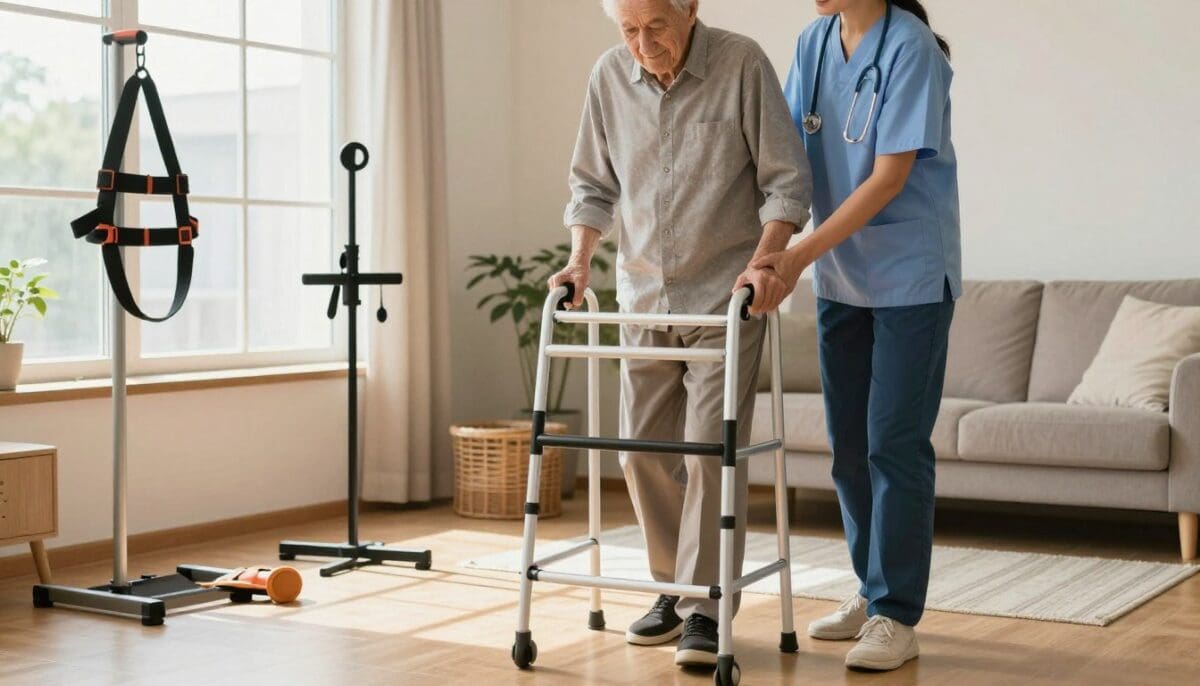
Comprehensive home-based assistance provides a structured path to regaining your physical independence safely. You deserve a care plan that fits your specific needs and household environment. These services go beyond simply watching you walk; they involve active monitoring and specialized techniques. By bringing professional expertise into your residence, you ensure every movement contributes to your long-term recovery goals.
This personalized approach focuses on your safety while pushing you toward your milestones. Professional providers assess your home for potential hazards and guide you through each step of the process. This level of attention helps you feel secure while you work on your mobility.
Gait Training and Balance Support
Caregivers focus on your walking rhythm and posture to prevent dangerous falls. They help you correct your stride and weight distribution on various floor surfaces throughout your house. Maintaining balance is essential for your confidence and physical safety. This support helps you navigate hallways and rugs without the constant fear of losing your footing.
Strength and Mobility Exercises
Consistent movement is the key to rebuilding muscle after any major surgical procedure. Your assistance team guides you through specific exercises designed to increase your range of motion. These targeted movements strengthen the specific muscles needed for steady walking. As your strength grows, you will find it easier to move independently throughout your home each day.
Safe Transfer Techniques
Moving between your bed and a chair requires precision to avoid injury. Caregivers use professional training to manage manual transfers or operate specialized equipment like a Hoyer Lift. These safe methods protect your surgical site from unnecessary strain while keeping you stable.
Mastering these transitions is a major step toward regaining your functional independence safely. Learning proper body mechanics reduces the risk of injury for both you and your helper. Eventually, these skills allow you to move with less physical assistance during your daily routine.
| Service Component | Primary Goal | Key Technique or Tool |
|---|---|---|
| Gait Training | Improve walking rhythm | Posture and stride correction |
| Balance Support | Prevent accidental falls | Weight distribution coaching |
| Transfer Assistance | Safe positional changes | Hoyer Lift and manual pivots |
| Mobility Exercises | Rebuild muscle strength | Range of motion routines |
The Advantages of In-Home Walking Assistance Over Facility-Based Care
Choosing to recover at home in San Antonio offers unique benefits that clinical facilities cannot match. While University Health provides quality rehabilitation centers, your home offers a peaceful environment for patients to heal.
In-home therapy ensures you receive undivided attention from dedicated specialists. This direct focus supports your health by letting you practice navigating your own specific stairs and hallways safely.
| Feature | In-Home Assistance | Facility-Based Care |
|---|---|---|
| Environment | Familiar and comfortable | Clinical and shared |
| Attention | One-on-one support | Divided between visitors |
| Commute | None required | Traffic and parking needed |
| Training | Real-world surfaces | Simulated equipment |
- Psychological Comfort: Healing in a familiar space boosts your mental well-being and speeds up progress.
- Reduced Fatigue: You save your energy for physical movement rather than exhausting commutes.
- Flexible Scheduling: Your sessions align perfectly with your personal energy levels and daily pain patterns.
Building Confidence While Reducing Fall Risk
By utilizing advanced technology like the TecnoBody Isofree system, you can actively reduce the danger of tripping during your daily routine. This innovative system treats each patient by focusing on stability and functional mobility. It allows you to practice your balance safely within a controlled environment during recovery.
Your self-assurance in your walking ability directly impacts how much you are willing to practice. Increased activity leads to better outcomes and a stronger sense of independence. Professional caregivers help you develop realistic assessments of your current physical capabilities.
This careful oversight prevents both excessive caution and dangerous overconfidence. Integrated fall prevention strategies address your specific environmental hazards and behavioral risks. Improving your reflex responses through specialized training protects you against unexpected slips.
- Psychological Support: Overcoming the trauma of a past fall is essential for maintaining steady progress.
- Proprioception Exercises: Training your body to sense its position improves your overall postural control.
- Graduated Challenges: Moving from basic household steps to community walking builds lasting comfort.
- Risk Assessments: Identifying unique vulnerabilities allows for targeted and effective safety interventions.
| Focus Area | Method Used | Expected Outcome |
|---|---|---|
| Physical Stability | Reflex Training | Faster Reaction Times |
| Mental Confidence | Overhead Support | Fearless Practice |
| Safety Habits | Hazard Assessment | Lower Accident Risk |
Building strength and stability involves a cycle of small, successful steps. Every session focuses on improving the natural mechanisms that keep you upright. This comprehensive approach ensures you feel secure and capable as you return to your favorite activities.
Personalized Recovery Goals for Every Patient
Successful recovery starts with a plan that prioritizes your personal needs and long-term aspirations. Our rehabilitation team crafts unique treatment plans that focus on what matters most to your life.
Whether you want to manage your home or return to work, every patient receives one-on-one attention. Your personalized therapy sessions adjust as you progress to include:
- Building strength for daily tasks.
- Returning to your favorite hobbies.
This approach ensures you reach your goals safely while maintaining independence throughout your journey.
How Professional Caregivers Support Your Rehabilitation Journey

At Continu Care Home Health, our experts provide the compassionate support you need to regain your independence. Our therapists use leading-edge technology to create a safe and effective rehabilitation environment right in your living room.
The team includes physical therapists and occupational specialists who work together for your recovery. These professionals have over 10 years of experience helping patients with strokes and various physical disabilities.
We focus on building trust and rapport through consistent, one-on-one care. This collaborative approach ensures that your team adjusts techniques based on your unique reactions rather than rigid protocols. Specialized documentation keeps every provider informed of your progress and changing needs.
| Care Team Member | Primary Focus | Support Benefit |
|---|---|---|
| Physical Therapists | Gait and Balance | Reduced fall risk and better walking |
| Occupational Therapists | Daily Living Tasks | Increased home independence |
| Therapy Assistants | Exercise Support | Consistent and safe daily practice |
Assistive Devices and Equipment Used During Recovery
You will benefit from a variety of assistive devices that enhance your mobility training. These tools range from traditional canes to advanced robotic systems. Professional guidance ensures every piece of equipment fits your specific functional level.
Specialized hand and arm support devices help patients after a stroke. These systems assist people with neurological conditions in regaining upper limb strength. Advanced therapy equipment like LiteGait reduces fall risks while you practice walking.
- Body weight support systems allow earlier walking practice.
- Robotic arms assist with upper extremity weakness.
- Technology provides feedback to track your improvement.
- The progression through tools marks your advancing capabilities.
Safe transfer training often includes using car simulators. Tools like the InMotion ARM Robot focus on shoulder and arm weakness. These devices ensure you gain maximum support while building your confidence.
| Equipment Name | Primary Purpose | Key Benefit |
|---|---|---|
| Lifeglov | Hand and Arm Impairment | Regains upper limb function |
| LiteGait | Body Weight Support | Reduces fall risk while walking |
| TecnoBody Isofree | Balance and Stability | Improves coordination |
| InMotion ARM | Robotic Assistance | Strengthens weak limbs |
Understanding Your Recovery Timeline and Milestones
Knowing what to expect during your healing process helps you stay motivated and focused. Your recovery timeline depends on your age, health, and how well you follow your exercise plan.
Each unique patient moves at a different speed. Meeting small goals keeps you moving forward during your specific rehabilitation program. Steady progress matters more than speed. It is vital to communicate with your medical team often.
| Recovery Phase | Primary Activity Focus | Expected Milestone |
|---|---|---|
| Initial Phase | Safe transfers and balance | Standing without assistance |
| Intermediate Phase | Gait training and mechanics | Walking with a mobility aid |
| Advanced Phase | Strength and endurance | Independent community walking |
The Role of Family in Supporting Your Walking Recovery
Your loved ones in San Antonio serve as a bridge between professional therapy and daily life during your recovery. They provide the emotional motivation and practical help that ensure clinical progress translates into home safety.
Professional caregivers train family members in safe methods to meet your specific needs. This collaborative approach helps patients avoid injuries while maintaining high motivation during difficult phases. Rehabilitation teams maintain constant contact to provide regular updates on your milestones.
| Care Arrangement | Support Level | Primary Benefit |
|---|---|---|
| Live-in Care | 24/7 Presence | Constant Safety |
| Full-time Care | Daily Support | Routine Stability |
| Part-time Care | Flexible Hours | Prevents Burnout |
Caregivers are available for live-in, full-time, or part-time care. This flexibility allows your family to participate in the healing process without feeling overwhelmed.
Coordination with Your Medical Team and Therapists

Your medical team and specialists work together to ensure your walking plan stays on track. This rehabilitation team includes your surgeon, therapists, and case managers who maintain constant contact. They share regular updates to provide the best health outcomes during your recovery.
Professional walking services document your daily progress and report directly to your primary physician. This ensures everyone follows the same therapy goals and safety restrictions. Effective communication among team members prevents confusion and keeps your healing process moving forward.
In-home caregivers collaborate with facility-based therapists to create a bridge of care. They monitor your functional improvements and report any pain or compliance challenges. This constant flow of information helps your medical team adjust your plan as you get stronger.
Managing other health conditions is also a priority during your recovery. Case managers assist with insurance requirements and necessary equipment needs. This integrated approach addresses every factor that influences your ability to walk safely again.
| Care Team Role | Primary Responsibility | Benefit to You |
|---|---|---|
| Surgeon & Physician | Medical Oversight | Sets safe activity limits |
| Physical Therapist | Mobility Training | Improves gait and balance |
| Home Care Provider | Daily Support | Ensures safety between visits |
| Case Manager | Care Coordination | Handles insurance and equipment |
Comprehensive Care Throughout San Antonio and Surrounding Areas
We support your journey to mobility with wide-reaching care options throughout the San Antonio community and nearby towns. Continu Care Home Health proudly serves patients and families by bringing expert rehabilitation support directly to your neighborhood.
Local access to therapy remains vital for your consistent progress. While University Health offers outpatient services at locations like Babcock and Southeast, our team provides personalized care in your own home.
- Receive expert care regardless of your specific location in the metro area.
- We visit private homes and assisted living facilities where you recover.
- Our local presence helps eliminate the transportation barriers you might face.
| Provider | Service Area | Setting |
|---|---|---|
| Continu Care | San Antonio Region | In-Home Support |
| University Health | Babcock & Southeast | Outpatient Centers |
| University Health | Robert B. Green | Specialized Clinic |
Why Choose Continu Care Home Health for Walking Assistance
Residents of San Antonio trust Continu Care Home Health for professional care that simplifies the journey back to health. Our caregivers bring over ten years of experience to help you overcome mobility hurdles after a stroke or major surgery. We provide dedicated services that focus on your specific needs and long-term goals.
Whether you manage complex injuries or chronic conditions like Alzheimer’s, we offer sincere and dedicated support. Our team performs thorough background checks on every expert entering your home to ensure trustworthy assistance. Contact our office at (210) 734-6166 or visit us at 3201 Cherry Ridge C319, San Antonio, TX 78230.
We believe in a genuine partnership that empowers you throughout the challenging recovery process. By choosing Continu Care Home Health, you connect with professionals who bring reliability and compassion to every visit. We tailor every plan to your unique circumstances rather than using standard protocols.
| Support Category | Conditions Managed | Our Care Standards |
|---|---|---|
| Neurological Recovery | Stroke, Alzheimer’s, Dementia | Compassionate, 10+ years experience |
| Physical Rehabilitation | Surgery, Injuries, Paraplegia | Personalized recovery goals |
| Safety & Trust | Seniors and Young Adults | Background checks and references |
Schedule Your In-Home Care Consultation Today
Your path to professional walking assistance begins with one simple call to our expert team.
We offer specialized services in San Antonio to help you regain your strength and mobility safely.
Our team provides the information you need to understand your recovery options clearly.
We tailor every plan to meet your unique needs and physical goals.
Taking action today moves you closer to the professional support that transforms your recovery experience. Call Continu Care Home Health at (210) 734-6166 to get started. You can also visit us at 3201 Cherry Ridge C319, San Antonio, TX 78230.
- Receive a comprehensive evaluation of your current mobility level and safety.
- Get answers to your questions about how in-home care integrates with medical treatment.
- Enjoy a no-obligation process designed to help you make informed decisions.
| Consultation Step | Provider Detail | Expected Result |
|---|---|---|
| Initial Inquiry | Call (210) 734-6166 | Quick Response |
| Home Assessment | San Antonio Experts | Safety Evaluation |
| Plan Creation | 3201 Cherry Ridge C319 | Personalized Support |
Professional Walking Assistance After Surgery in San Antonio
Achieving full recovery in San Antonio requires dedicated therapy and reliable health information. Our team provides the professional support you need to regain your independence safely at home.
This article is not medical advice. Please contact your Doctor before implementing anything covered in this post.
Contact Continu Care Home Health today at (210) 734-6166 or visit 3201 Cherry Ridge C319, San Antonio, TX 78230. We serve the community with compassionate, professional care in the comfort of your home.
## FAQ
### Q: How does professional support help my rehabilitation?
A: Expert therapists guide you through a variety of movements to improve your mobility. This focus on strength helps patients overcome physical needs and injuries. You receive the information required to safely reach your goals.
### Q: Which health conditions qualify for these services?
A: People recovering from a stroke or a spinal cord issue often find these programs helpful. Whether you face neurological needs or joint injuries, Continu Care Home Health supports your health. Each patient receives a plan for better balance.
### Q: What should I expect during my first therapy session?
A: A specialist will evaluate your current strength and balance. They keep a steady hand nearby while you test your mobility. This ensures the recovery process is safe and effective for every patient. They also check how a cord injury might impact your movement.
### Q: Is this walking support available in the local San Antonio region?
A: Yes, Continu Care Home Health offers expert services throughout the area. If you need assistance after a major surgery, our team is ready to help. We coordinate with your medical team to ensure all your needs are met at home.
### Q: Why is professional help better than doing it alone?
A: Professionals provide a steady hand to prevent falls while you build strength. They understand the unique needs of patients with complex health issues. Following a medical surgery, having expert information ensures a faster and safer recovery journey.