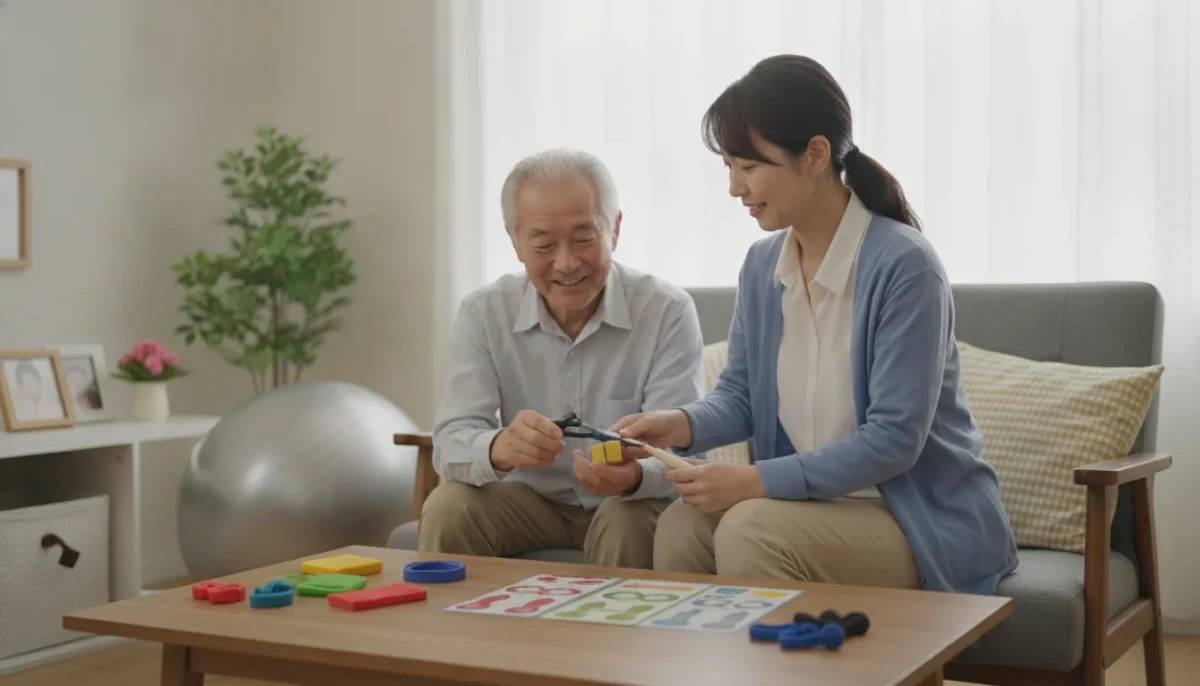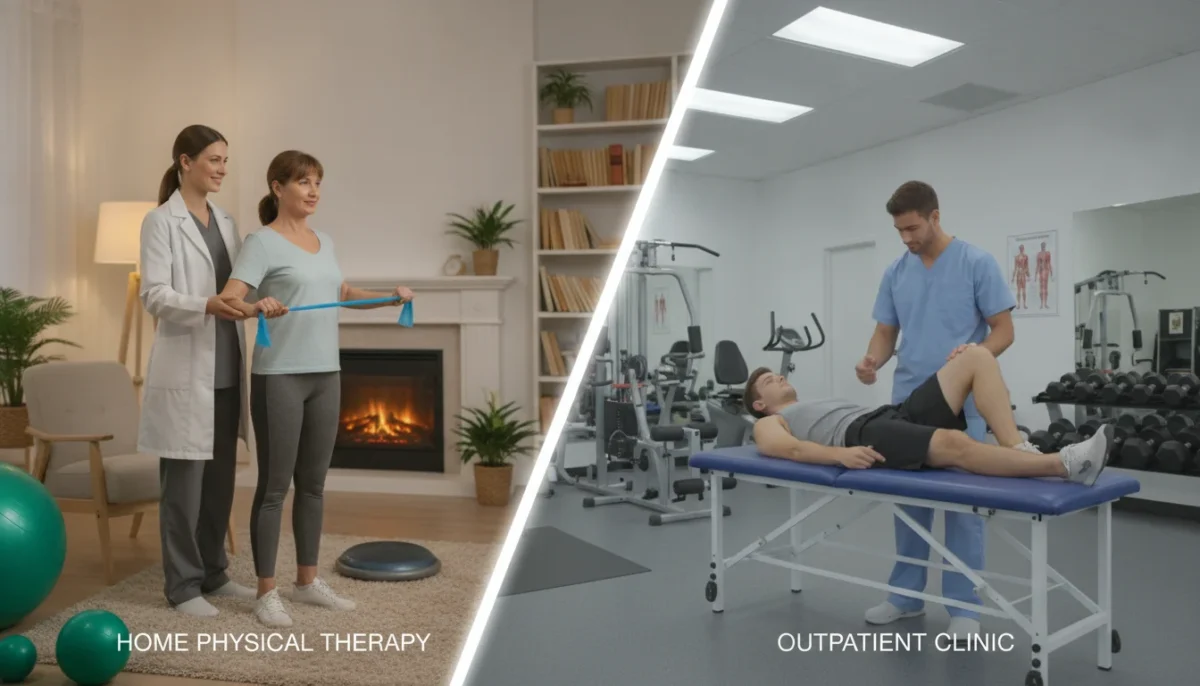
Why Doctors Recommend Home Health Care for Patient Recovery

Managing Chronic Conditions at Home: A Complete Guide for Families

Facing a major medical need is challenging. The decision about where to receive support can feel overwhelming. This choice deeply affects recovery results and a family’s sense of security.
Having access to quality medical options is essential. It’s vital for individuals managing long-term conditions or healing after an event. You want the best possible path forward.
Professional in-home services create a vital link. They bridge the gap between intensive facility treatment and living independently. This option allows for expert attention in a familiar, comforting environment.
Selecting the right support system is crucial. It ensures your loved one gets the necessary professional aid where they feel most at ease. Families must thoughtfully weigh the benefits of different settings.
Understanding the distinct features of each choice empowers you. With clear knowledge, you can make an informed, confident decision for someone you love. We’ll explore how these settings compare for various needs.
Key Takeaways
- The setting for medical support significantly impacts patient recovery and family peace of mind.
- Access to high-quality treatment options is a fundamental need during illness or recovery.
- In-home professional services act as a bridge between hospital-level care and independent living.
- Choosing the appropriate path ensures expert attention in a comfortable, known environment.
- Families should compare the advantages of different care environments and their resources.
- Being informed about the differences helps you make the best decision for your loved ones.
- Skilled in-home support is a critical component of modern medical delivery systems.
Introduction to In-Home and Hospital Care
The modern healthcare system offers distinct pathways for treatment. Each has its own structure and focus. Knowing the core definitions helps you evaluate what’s best.
Defining Home Health Care and Its Benefits
This service involves medical support provided at a person’s residence. It aims to treat a chronic condition or help recovery. Personalized attention addresses specific needs.
One analysis of five studies showed greater satisfaction. Patients discharged early to this setting reported better outcomes. It brings professional aid directly to you.
Understanding Hospital Care for Acute Conditions
This setting is for acute situations needing immediate treatment. Specialized professionals manage severe illness. A dedicated team provides 24/7 monitoring.
Advanced tools like MRI scans are available here. It is a critical resource for complex surgeries. The environment is centralized for intensive support.
| Aspect | Home Health Care | Hospital Care |
|---|---|---|
| Primary Focus | Recovery & Independence | Acute Illness Management |
| Setting | Patient’s Residence | Centralized Facility |
| Key Resources | Mobile Medical Services | Advanced Diagnostic Tools |
| Team Structure | Visiting Professionals | Dedicated In-House Staff |
Benefits of In-Home Health Care
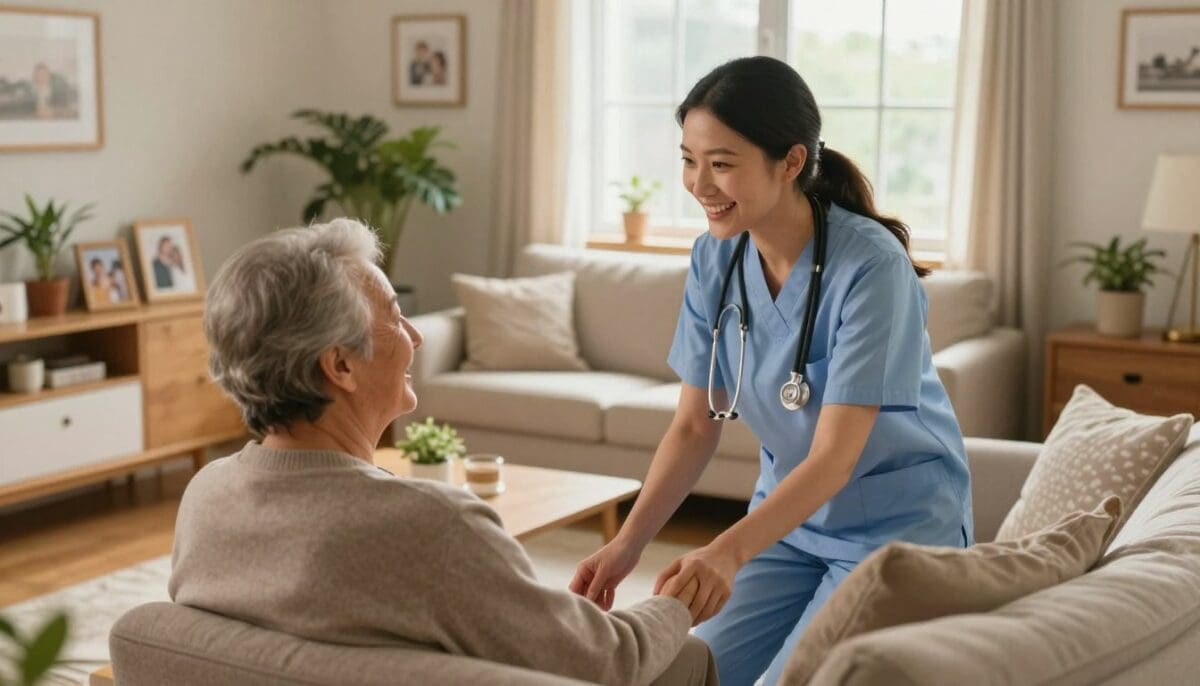
Recovering in a familiar space offers distinct advantages that extend beyond medical treatment. This approach combines clinical expertise with the psychological comfort of your own residence.
Structured support plans are tailored to your specific needs, promoting better outcomes.
Personalized Care in the Comfort of Your Home
A personalized plan is developed for each individual. It includes medication management and wound care delivered by licensed professionals.
Remaining in a known environment significantly enhances overall quality of life. This setting reduces stress, which is crucial for healing after a surgical procedure or an injury.
Improved Recovery and Emotional Well-Being
Skilled nursing and physical therapy are core components of this model. They promote independence and help patients regain function.
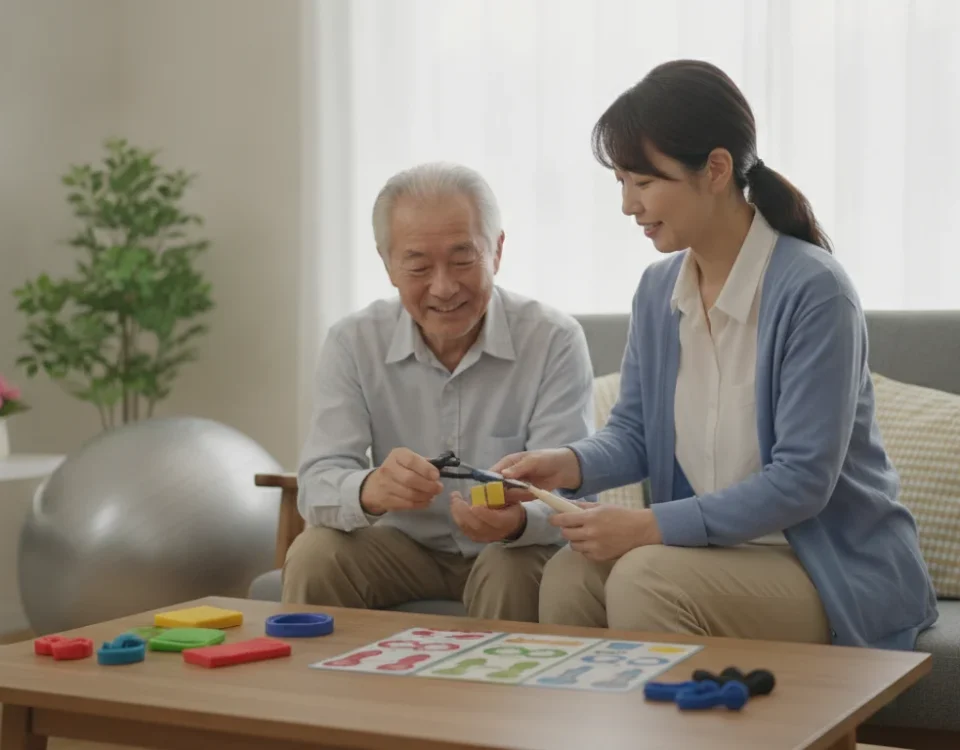
The benefits extend to mental well-being, as people feel more secure. Services like occupational and speech therapy are essential for recovery.
| Advantage | Clinical Benefit | Personal Impact |
|---|---|---|
| Tailored Support Plans | Precise medication & wound management | Reduces patient anxiety and stress |
| Professional Therapy On-Site | Faster functional recovery post-surgery | Builds confidence in a safe setting |
| Continuous Condition Monitoring | Prevents complications for chronic issues | Provides peace of mind for families |
This model allows for professional attention where you are most at ease, fostering both physical and emotional healing.
Home Health vs Hospital Care: Direct Comparison
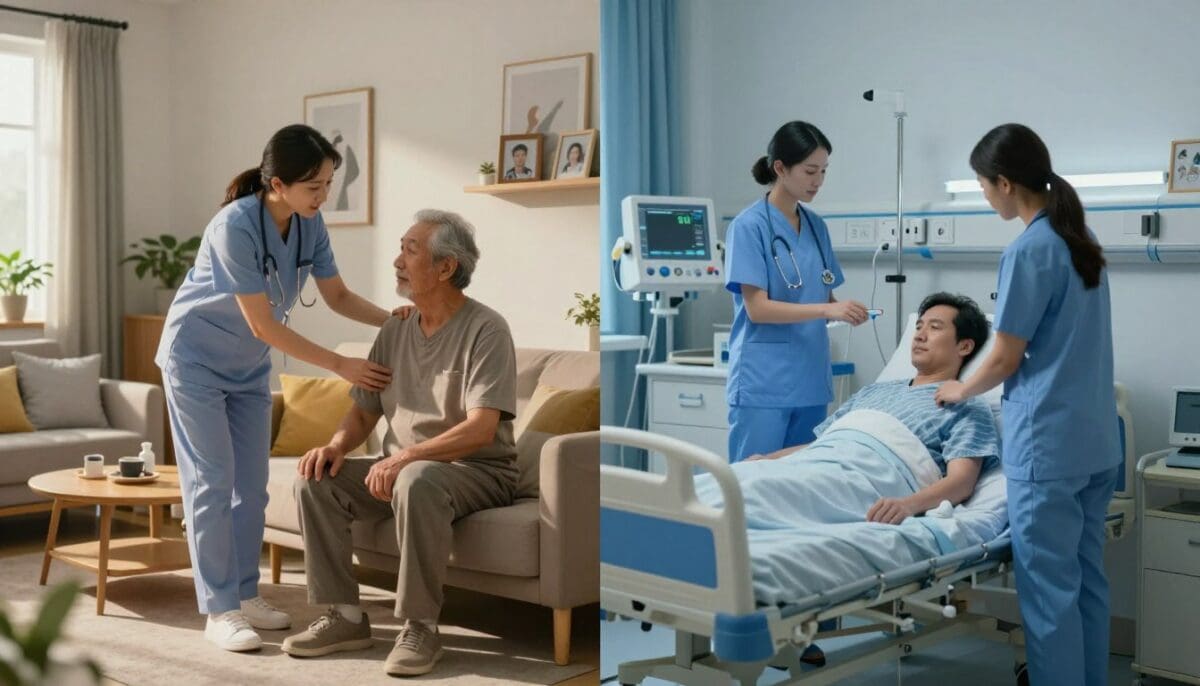
A side-by-side look at clinical resources and financial models reveals the practical distinctions between these two pathways. This direct analysis helps you weigh the pros and cons based on specific needs.
Clinical Differences and Care Team Specialization
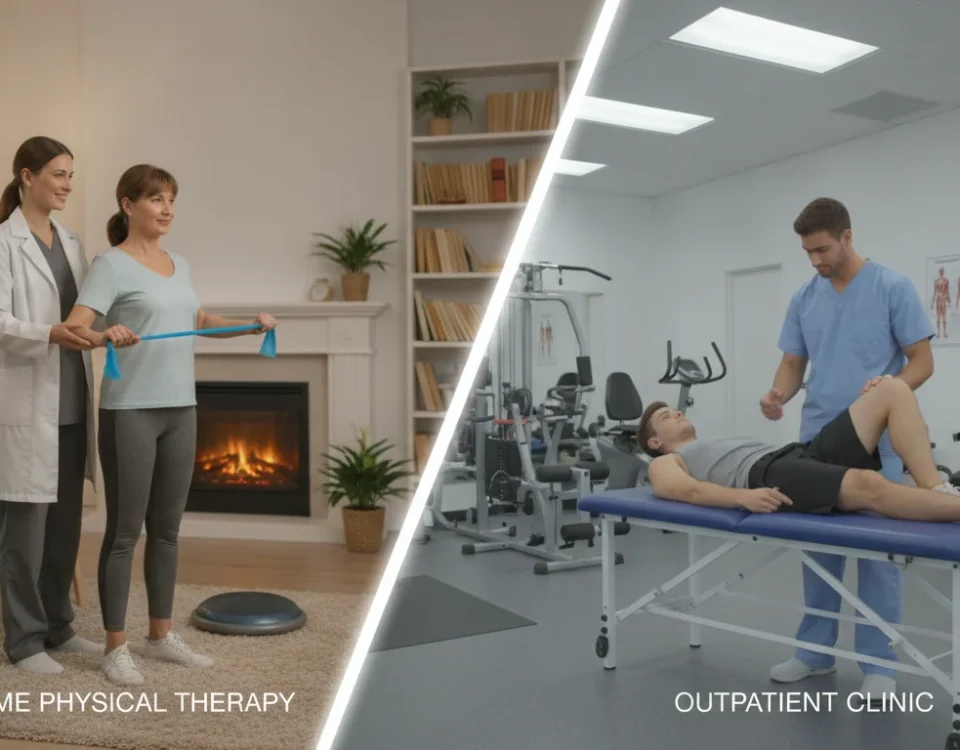
Facility-based treatment provides immediate access to advanced technology and constant monitoring for acute illness. The professional care team there includes various specialists working in one location.
In contrast, home health care relies on scheduled visits from nurses and therapists. These professionals coordinate closely with family members to provide support. The setting fundamentally changes the available resources.
| Clinical Aspect | Hospital Setting | Home-Based Setting |
|---|---|---|
| Monitoring Level | 24/7 professional oversight | Intermittent, scheduled visits |
| Team Focus | Specialists for immediate crisis | Nursing & therapy for ongoing recovery |
| Technology Access | On-site advanced diagnostics | Portable medical equipment |
Financial Considerations and Cost Implications
Payment models differ significantly between these settings. Home health care services are often covered by Medicare or Medicaid for eligible individuals.
Facility stays typically involve different insurance billing and can be far more expensive for long-term needs. Comparing the cost is a vital step in planning.
Organizations like Optum (1-425-382-4790) can explain how they manage hospital-level services in a residence. Understanding these differences in coverage and expense is crucial for your decision.
Factors to Consider When Choosing the Right Care Setting
Your choice between different medical environments hinges on a clear assessment of specific personal and clinical criteria. This decision directly impacts treatment effectiveness and overall well-being.
Assessing Your Medical Needs and Patient Condition
Begin by consulting your doctor. A professional must order these services and confirm your eligibility. They will evaluate if your situation requires the intensive resources of a facility.
A stable condition needing ongoing nursing or therapy often suits a home-based plan. Conversely, a severe, acute illness or injury typically necessitates facility-level support. Determine if constant monitoring or scheduled visits are better.
Family members should review all available options. The chosen path must align with recovery goals and personal priorities. It should address both clinical needs and the emotional benefits of a familiar environment.
| Decision Factor | Favors Home-Based Setting | Favors Facility Setting | Key Questions to Ask |
|---|---|---|---|
| Medical Stability | Stable condition needing ongoing nursing | Acute, severe illness or injury | Is 24/7 professional oversight required? |
| Required Resources | Intermittent professional visits | Advanced diagnostics & constant oversight | What technology is essential for treatment? |
| Personal Priorities | Emphasis on comfort & familiar environment | Immediate access to a specialized team | Where will the patient feel most secure and at ease? |
Always verify that the professionals providing the service are licensed and experienced. Effective care team coordination ensures all necessary medical resources are available, whether at a residence or in a facility.
Final Considerations When Choosing In-Home or Hospital Care
Determining the optimal support setting is a pivotal step toward effective recovery. This choice impacts your loved one’s comfort and progress. Evaluating clinical needs against personal preferences is essential.
Continu Care Home Health provides professional, compassionate home health care. We serve patients and family members throughout San Antonio and surrounding areas. Our focus is on delivering high-quality services in a familiar, comforting environment.
Assessing specific medical needs and associated costs guides your decision. Our dedicated team is committed to supporting your well-being and independence.
We invite you to contact Continu Care Home Health to learn more. Call (210) 734-6166 or visit 3201 Cherry Ridge C319, San Antonio, TX 78230. Our service is here to help you or a loved one.