From Hospital to Home, We’re With You

Gentle Wound Care for a Safe Recovery

You are starting a transformative journey toward moving without pain. This vital change begins right after your joint replacement surgery. It represents a major step toward getting your life back on track and enjoying every day.
Nearly 1 million Americans undergo these procedures every year to improve their overall health. For many patients, the best place to heal is right in your own familiar surroundings. A clear plan for joint replacement recovery at home San Antonio helps you gain strength and confidence.
Professional support makes a huge difference during your recovery process. Studies show that home-based therapy leads to fewer complications and much faster healing. By staying at home, you can focus on your progress in a space where you feel safe.
Our team at Continu Care helps you navigate every phase of this surgery with expert medical support. We serve the san antonio area with a focus on your unique physical needs and personal goals. This guide provides the practical steps you need to return to the activities you love most.
Key Takeaways
- Regain your independence at your own pace in a comfortable setting.
- Reduce medical risks with professional support tailored to your needs.
- Follow a clear step-by-step plan to reach your healing milestones.
- Improve long-term mobility by staying active and engaged in therapy.
- Access expert care that helps you avoid unnecessary hospital visits.
- Join thousands of people who successfully return to an active lifestyle.
Understanding Joint Replacement and Home Recovery
Choosing a joint replacement surgery is a major decision that opens the door to improved mobility and less pain. Preparing for the days following your operation is just as vital as the medical procedure itself.
What Is Joint Replacement Surgery
A joint replacement involves removing a damaged joint and installing an artificial prosthesis. This device is usually made of metal, ceramic, or plastic materials that mimic your natural anatomy.
Surgeons often perform this replacement surgery to treat severe arthritis or significant injury. Modern replacement surgery techniques allow for more precise fits and faster return to movement.
While hip and knee are the most common, this surgery also helps those with damaged shoulders or ankles. Understanding these basics helps you feel empowered as you begin your path to wellness.
Why Home Recovery Works
Healing at home offers unique benefits that facility-based care cannot always match. Research shows that patients who stay in a familiar environment often experience better outcomes and fewer complications during recovery.
This approach gives you more control over your healing journey with professional support from Continu Care Home Health. One-on-one attention helps you achieve a successful replacement result while avoiding hospital-acquired infections.
Professional care ensures that joint replacement patients gain strength faster through personalized physical therapy. This specialized replacement care provides long-term relief, while the surgery helps you return to the activities you love.
Staying in your own space allows you to use your own furniture and navigate your real-world environment. A final joint replacement goal is reaching total independence with the help of dedicated experts.
| Feature | Hospital or Rehab Center | Home with Continu Care |
|---|---|---|
| Environment | Clinical and unfamiliar setting | Comfortable and familiar home |
| Infection Risk | Higher risk of hospital germs | Reduced exposure to infections |
| Attention | Shared care between many people | Dedicated one-on-one support |
| Independence | Regulated schedules and rules | Empowered control over daily life |
Step 1: Prepare Your Home Before Surgery
Setting up your house for a new joint starts weeks before the actual procedure. You should begin preparing your home at least fourteen days before your scheduled surgery. This proactive approach ensures everything is ready for your safe return and post-operative care.
Clear Pathways for Walker Use
Make sure you can move easily through every room with a walker or crutches. Remove small area rugs, tuck away loose electrical cords, and rearrange bulky furniture. These simple steps significantly improve your mobility and prevent dangerous trips or falls.
Install Bathroom Safety Equipment
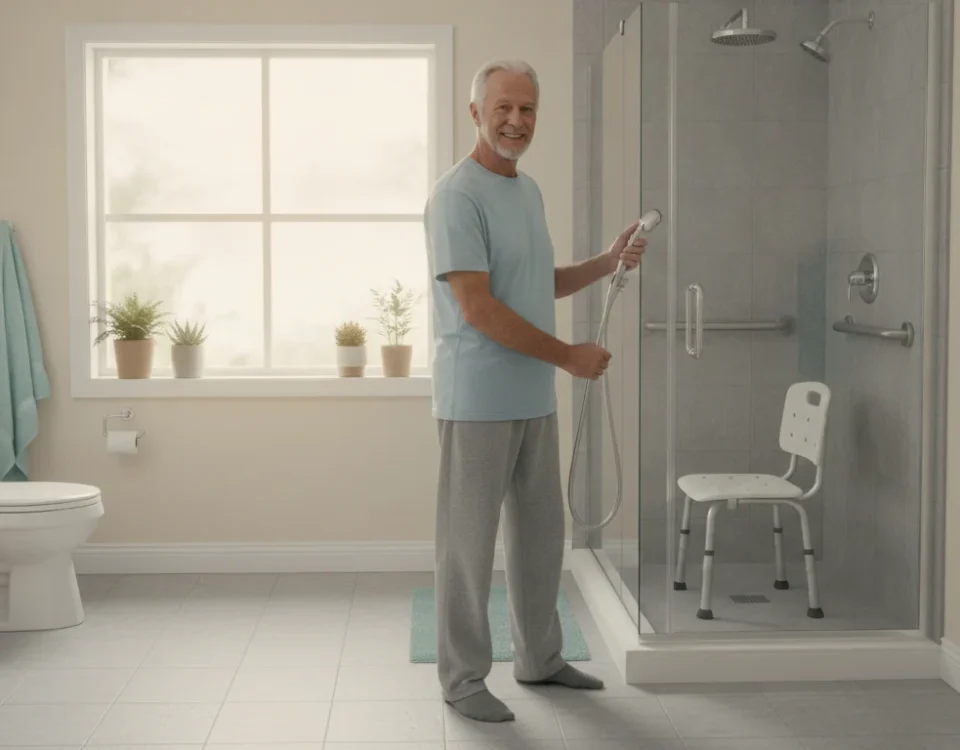
Your bathroom requires special attention after a joint replacement. Install sturdy handrails in the shower and add grab bars next to the toilet for extra leverage. You may also want to use a raised toilet seat to reduce strain on your healing joint.
Set Up Your Recovery Station
Create a dedicated recovery spot on the main floor to avoid climbing any stairs. Make sure you choose a firm, comfortable chair that allows you to elevate your legs easily. Keep your phone, remote control, and water within arm’s reach at all times.
Stock Essential Supplies
Stock your kitchen with healthy, pre-made meals and plenty of ice packs. You should also consult with your doctor about any specific equipment needed for your replacement type. Finally, organize a support team of friends to help with chores and grocery shopping.
| Recovery Category | Essential Action | Safety Benefit |
|---|---|---|
| Floor Safety | Remove all throw rugs | Prevents tripping hazards |
| Bathroom | Install grab bars | Provides balance and support |
| Kitchen | Prep 2 weeks of meals | Reduces standing time |
| Accessibility | Move bed to main floor | Eliminates stair climbing |
Step 2: Navigate the First 72 Hours After Surgery
Once you return home from the hospital, the initial three days mark a critical phase in your recovery. This short window is often when you feel the most discomfort, but it is also the prime time to kickstart your healing process.
Your focus must remain on following instructions to ensure the best possible outcome for your joint. You should expect to feel tired and need frequent rest periods as your body heals.
Control Pain and Swelling Immediately
You will likely face the most intense pain and swelling during these first 72 hours. It is the most critical period to follow your pain management protocol exactly as ordered by your doctor.
Use ice packs frequently and keep your leg elevated to help reduce fluid buildup and inflammation. Your home health team will monitor your incision and check for any signs of complications during this window.
Begin Gentle Movement with Your Therapist
Physical therapy usually begins as early as the first day after your surgery. Movement is vital to prevent blood clots and keep the surrounding muscles active.
Experienced therapists will guide you through small, controlled motions to prevent stiffness in the limb. These simple exercises help your body adapt to the new replacement while maintaining healthy blood flow.
| Recovery Day | Main Activity | Primary Goal |
|---|---|---|
| Day 1 | Standing with a walker | Improve circulation |
| Day 2 | Basic leg pumps | Reduce stiffness |
| Day 3 | Short walks in home | Gain independence |
Protect Your New Joint
Your medical team will teach you how to move safely without straining your surgery site. You must follow all weight-bearing rules, such as using a walker for balance and support at all times.
Careful movement is the key to long-term success. Learning how to get in and out of bed properly prevents dangerous twisting of the operated limb.
Taking these precautions protects your replacement and ensures the hardware settles correctly during these early days. Always prioritize safety over speed when moving around your home.
- Monitor your incision site daily for any increased redness or drainage.
- Take frequent rest breaks to conserve energy for your exercises.
- Drink plenty of water to help your body recover from the procedure.
- Strictly follow all weight-bearing restrictions provided by your surgeon.
Step 3: Build Your Routine in Weeks 1-2

As you move into weeks one and two, your focus shifts toward building a steady habit of movement and care. This phase marks the true start of your healing journey with professional home health support.
You must balance your rest with new instructions for daily activities. A physical therapist helps every patient learn to navigate their home safely while taking time to recover properly.
Follow Daily Activity Restrictions
You must follow specific rules to protect your new joint from injury. Avoid bending too far, twisting your body, or lifting heavy objects. This treatment plan prevents dislocation while you are still vulnerable.
Your safety depends on these techniques for dressing and moving around the house. Use the tools and methods your therapist provides to remain independent without risking your progress.
Practice Simple Strengthening Exercises
Your therapist will guide you through simple exercises designed to stop muscle stiffness. These movements maintain your muscle tone and improve your range of motion gradually.
A consistent routine supports a much smoother recovery. Always perform these movements exactly as shown to ensure you do not overwork your surgical site.
Monitor Your Incision Site
Check your incision every single day for signs of redness or unusual warmth. Early detection of a potential infection is a vital part of your recovery success.
| Task | Frequency | Benefit |
|---|---|---|
| Incision Check | Daily | Prevents Infection |
| Movement | Every 1-2 Hours | Prevents Clots |
| Icing | As Needed | Reduces Swelling |
Step 4: Manage Pain After Knee Replacement
Because your knee reacts differently than a hip, managing pain after total knee replacement involves unique strategies. Unlike other joints, the knee often experiences moderate to severe swelling for several weeks following knee replacement. This total knee recovery requires significant patience because your new joint may take months to feel completely natural.
Apply Ice and Elevation Properly
Reducing swelling is the most important part of your pain management plan. You should apply ice packs to your knee three to four times every day for about 20 minutes. Consistent icing significantly numbs discomfort and controls the initial inflammatory response.
Always elevate your leg so the knee stays at or above heart level while you rest. This position helps fluid drain away from the surgical site to promote faster healing. Proper elevation is especially critical during the first few weeks when swelling is most intense.
Take Medications as Prescribed
Most people use oral medications for several weeks following knee replacement surgery. You must take these exactly as directed to stay ahead of the pain before it becomes severe. Staying ahead of discomfort is much easier than trying to stop it once it starts.
Additionally, completing your physical therapy exercises helps reduce inflammation. These movements prevent the stiffness that causes extra pain during your total knee transition. Movement keeps the blood flowing and ensures your new joint remains flexible.
Watch for Signs of Complications
While some discomfort is normal during total knee healing, you must watch for warning signs. Contact your doctor if you notice extreme warmth, redness, or new, severe swelling. These symptoms could indicate an infection or a blood clot after knee replacement surgery.
Monitoring your progress ensures the long-term success of your total knee replacement. Most patients see the best results after several months of diligent care. Always report any knee symptoms that do not improve with rest or medication.
| Recovery Tool | Usage Frequency | Primary Benefit |
|---|---|---|
| Ice Packs | 3-4 times per day | Controls knee swelling |
| Elevation | Daily while resting | Reduces inflammation |
| Medication | As physician directed | Maintains comfort levels |
Step 5: Manage Pain After Hip Replacement

Successfully handling your comfort levels after a hip replacement requires balancing medication with very specific safety precautions. While you might notice less swelling than a hip knee procedure, your movements remain restricted to keep you safe. This replacement surgery requires you to protect the joint while the surrounding tissues heal.
Follow Hip Precautions Carefully
You must follow strict guidelines to prevent dislocation during the first several weeks. Avoid bending your hip beyond 90 degrees and never cross your legs while sitting. Your physical therapist will help you learn to complete daily activities while putting your new replacement at risk.
Use Pain Relief Techniques
Effective pain management involves elevating your leg on pillows several times a day to reduce inflammation. Apply ice to the joint for 20 minutes to control discomfort and internal swelling. You may use prescribed muscle relaxers or opioids initially before switching to over-the-counter NSAIDs.
Avoid Dangerous Movements
Stay away from low chairs and avoid twisting your leg while standing. Never bend over to tie your shoes or pick up items from the floor. Contact your doctor immediately if you feel your hip has “popped out” or if you experience sudden, severe pain.
| Recovery Area | Action to Avoid | Safe Alternative |
|---|---|---|
| Hip Replacement Bending | Bending forward past 90 degrees | Using a long-handled reacher tool |
| Hip Replacement Seating | Sitting in low, soft sofas | Choosing a firm, high-seated chair |
| Total Replacement Positioning | Pivoting or twisting the hip | Taking small steps to turn the body |
Step 6: Work with Physical Therapy at Home

Once you settle in, home health physical therapy joint replacement San Antonio services begin to transform your mobility. This professional care arrives at your doorstep to ensure you recover safely and effectively in a familiar environment.
What Your Physical Therapist Will Do
Upon returning home, physical therapists will conduct a comprehensive assessment of your physical and functional status. These physical therapists focus on helping you navigate your actual living environment with confidence.
This personalized care ensures you move with greater ease while staying comfortable. Your therapist will also help monitor your incision to prevent any complications during the early stages of healing.
Your Personalized Exercise Program
You will receive a personalized program of exercises specifically designed for your recovery goals. This physical therapy often includes strength training and manual therapy to reduce joint stiffness.
Your therapists may use advanced techniques, such as electrical stimulation, to improve muscle function. This targeted therapy helps you regain your mobility and restore your independence as quickly as possible.
Family Education and Support
The therapy team from Continu Care Home Health provides vital education to your family members. These physical therapists teach your loved ones how to assist you and recognize early signs of infection.
By working closely with your team, you benefit from expert physical therapy. Through this therapy and consistent physical therapy, you can safely regain the highest level of functioning possible. Expert physical therapy makes all the difference in your long-term success.
Joint Replacement Recovery Timeline and Milestones in San Antonio
Understanding the specific milestones for your joint replacement recovery in San Antonio helps you navigate the healing process with confidence. Every patient heals at their own pace, but following a standard time frame allows you to measure your progress effectively. Setting realistic goals is essential to get back to your favorite hobbies safely.
Weeks 2-4: Gaining Independence
During this phase, you will notice your pain beginning to subside as you gain more independence. Many patients can walk short distances without assistance and perform daily tasks more comfortably.
By the third week, your home health team usually helps you transition to outpatient therapy. This move happens once you have achieved enough mobility to travel to appointments safely.
Months 1-3: Strengthening Your Joint
You should expect to feel increasingly energized during this crucial period. You will continue physical therapy to build strength in the muscles surrounding your replacement.
Milestones include returning to activities like driving. Always ensure you receive clearance from your doctor before operating a vehicle to ensure safety for everyone on the road.
Months 3-6: Returning to Normal Activities
By this stage, you will see significant improvement in how your replacement feels. Reduced swelling and stiffness allow you to engage in more intense activities, such as walking longer distances.
| Phase | Primary Focus | Expected Milestone |
|---|---|---|
| Weeks 2-4 | Basic Movement | Walking short distances |
| Months 1-3 | Functional Power | Returning to driving |
| Months 3-6 | Joint Endurance | Walking long distances |
Months 6-12: Full Function Restoration
Most patients achieve full function restoration by the one-year mark. While you work to get back to your normal routines, you may still experience mild soreness after very active days.
Your recovery is a personal journey. Your dedication to your exercise program determines how quickly your mobility returns after your replacement surgery in San Antonio.
Step 7: Transition to Outpatient Therapy

Transitioning to an outpatient clinic is a significant leap forward in regaining your full strength and independence. Around the third week of your recovery, your care team typically coordinates this safe handoff. This important shift ensures you receive professional treatment in a facility equipped with specialized tools.
Recognize When You’re Ready
You are ready for this change when you can safely get in and out of a car. You should demonstrate consistent progress and require minimal assistance for basic tasks. This transition means your rehabilitation plan is evolving to include more functional activities.
Professional supervision helps you push past your current limits safely. During this phase, you will work on the following goals:
- Gaining access to specialized gym machines.
- Practicing advanced balance therapy techniques.
- Building endurance for longer periods of activity.
Continue Your Home Exercise Program
Even after starting at a clinic, you must keep up with your home exercises. These daily movements bridge the gap between formal therapy sessions and help build lasting strength. Every patient benefits from maintaining this discipline to achieve a successful outcome.
| Readiness Factor | Description | Importance |
|---|---|---|
| Vehicle Access | Entering and exiting a car safely | Allows travel to the clinic |
| Mobility Level | Walking with minimal assistance | Shows physical stability |
| Session Progress | Consistency in home visits | Proves readiness for intensity |
When to Contact Continu Care Home Health

You should contact our team if your doctor has recommended skilled care following your joint replacement surgery. Our dedicated team specializes in supporting San Antonio patients through every phase of recovery with professional home services. You will experience personalized, one-on-one attention from staff who understand the unique challenges of surgical healing.
If you are planning an upcoming surgery, our team can help you arrange post-operative care in advance. Local patients in San Antonio benefit from our specialized team and clinical experience. Our team helps patients recover safely and effectively through one-on-one nursing and physical therapy sessions.
Contact your doctor immediately if you experience signs of serious complications. Reach out to our team at (210) 734-6166 or visit 3201 Cherry Ridge C319, San Antonio, TX 78230 for routine recovery help. We are committed to helping patients thrive at home with high-quality care.
Joint Replacement Recovery Timeline and Milestones in San Antonio
Successful healing after replacement surgery depends on a structured plan and a dedicated support team. You have learned that a step-by-step recovery at home leads to the best outcomes. Most patients find that following these stages helps them get back to the life they love.
Your surgery success relies on your commitment and the expertise of your clinical team. By choosing professional care, you ensure that your joint replacement heals safely. Our team of experts works with your surgical team to provide the guidance patients need.
This replacement surgery journey requires patience, but the result is a more mobile life. Our team supports patients throughout their recovery to ensure the joint replacement remains stable. Let our team help you manage your surgery needs in the comfort of home. Following these steps after your surgery ensures your long-term safety and independence.
Continu Care Home Health proudly serves patients and families throughout San Antonio and surrounding areas. We provide compassionate, professional care delivered in the comfort of home. Contact us to learn more about in-home services or to schedule a consultation for your loved one.
| Service Provider | Contact Phone | Office Address |
|---|---|---|
| Continu Care Home Health | (210) 734-6166 | 3201 Cherry Ridge C319, San Antonio, TX 78230 |
This article is not medical advice. Please contact your Doctor before implementing anything covered in this post.
## FAQ
### Q: What is the typical time for a total knee experience?
A: You will see great outcomes after the procedure. Your doctor creates a plan for your needs. This healing process helps you regain your strength through simple exercises.
### Q: How do physical therapists assist with hip knee mobility?
A: These experts help you get back to your normal life. They provide treatment to reduce arthritis symptoms. Your team ensures you perform activities safely while your body is healing.
### Q: What helps with joint pain after a total joint procedure?
A: Using ice and keeping your leg elevated works well. Your doctor provides a plan to handle any discomfort. Following this care allows you to stay active and mobile.
### Q: What should a patient do to prepare for knee replacement surgery?
A: Make sure your living space is clear of rugs. This helps you move with a walker much easier. Preparing before the surgery makes the experience better for you and your family.
### Q: Is a hip replacement different from other replacements?
A: Every procedure has unique steps for success. Your therapists will guide you through movements that protect your new limb. Focus on your physical therapy to reach your goals.