
How San Antonio Families Can Help Prevent a Hospital Readmission

A San Antonio Family’s Guide to Fall-Proofing Mom’s Home

Your recovery begins the moment you leave the hospital. Understanding the knee surgery physical therapy timeline helps you feel more confident during the first weeks at home.
Early steps aim to manage pain and reduce complications. Professional guidance ensures your home is safe and ready for healing.
By following a consistent program, you will work to restore function after a knee replacement. Dedication to prescribed exercises and careful wound checks are key to steady progress.
This guide explains what to expect, how to stay safe at home, and ways to regain mobility over the coming months after replacement surgery.
Key Takeaways
- Recovery starts immediately and follows a clear plan you can use at home.
- Managing pain and preventing complications are top priorities early on.
- Professional support makes your environment safer for healing.
- Consistent work on exercises helps restore strength and motion.
- Careful monitoring of the surgical area supports successful recovery.
Preparing for Your Procedure
Starting a targeted prehab plan gives your legs a head start before the operation. A short, structured program improves strength, motion, and flexibility so you enter recovery ready to progress.
Prehab typically includes simple exercises such as clamshells, bridges, and chair pushups. These moves boost the muscles around your joint and build the strength needed for early rehab.
Prehab and Strengthening
Work with your surgeon and a licensed physical therapist to pick safe exercises for your knee pain and overall health. A therapist will tailor the program to your needs and monitor your progress.
- Focus on leg strength and range of motion with daily, short sessions.
- Improve flexibility to reduce stiffness after the replacement.
- Follow guidance so you can begin outpatient therapy sooner and more effectively.
Consistent pre-surgery conditioning has been shown to improve outcomes after a total knee replacement. Your medical team will track progress and adjust the program before the procedure to set you up for a smoother recovery.
Understanding Your Knee Surgery Physical Therapy Timeline
After the operation, care shifts from hospital teams to a home-focused recovery plan. You will move through defined stages that guide activity, rest, and progress.
Hospital Recovery Phase
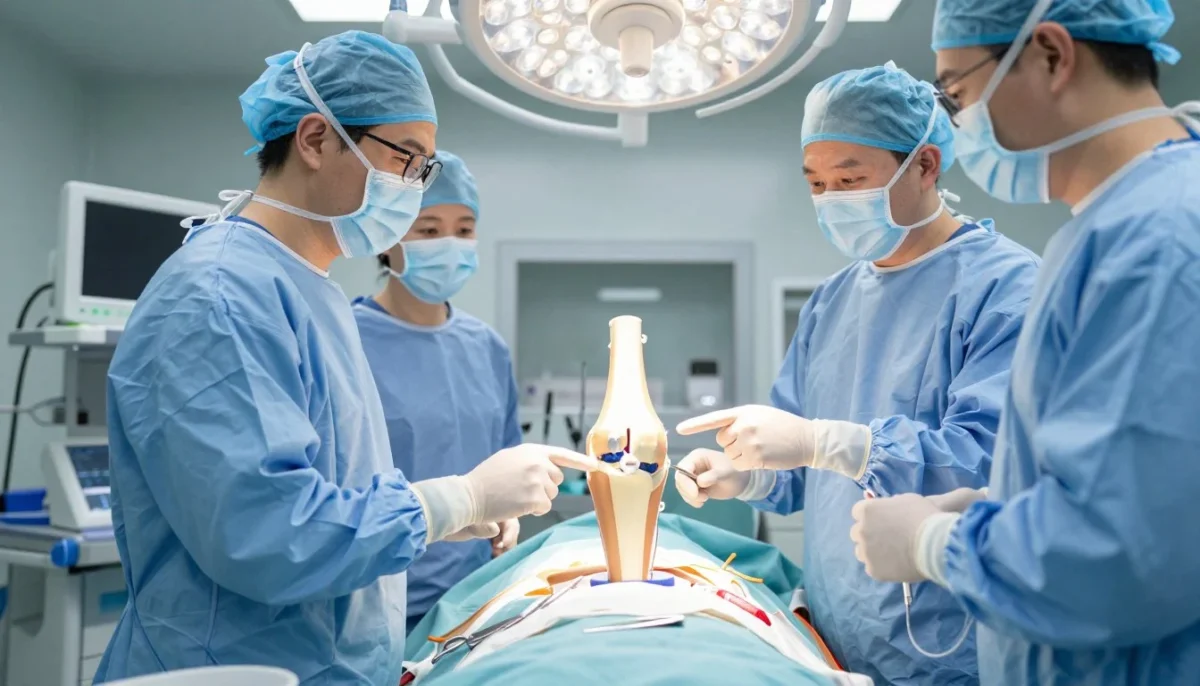
Most patients begin physical care within a day of the procedure. A therapist will help you stand, walk a few steps, and get out of bed safely.
Expect to stay in the hospital between one and five days after a total knee replacement. Staff will watch for blood loss, manage pain, and teach wound checks before discharge.
Outpatient and Home Therapy
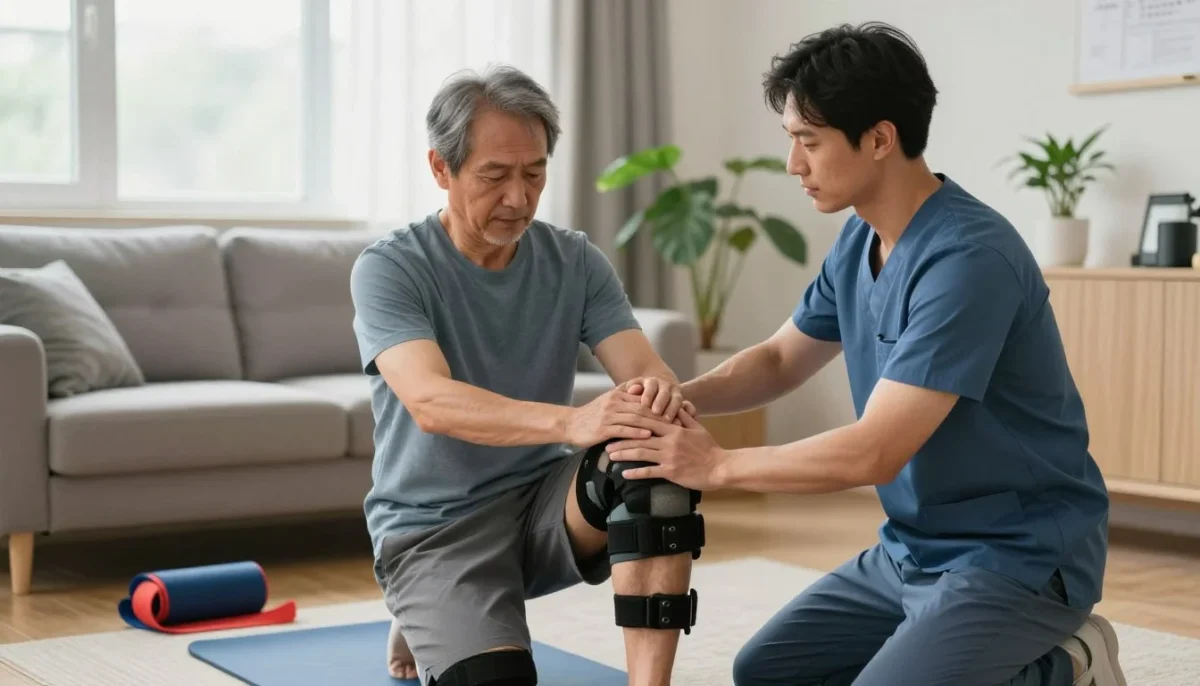
Once home, your program includes clear instructions for monitoring the incision and controlling swelling. It is vital to keep your leg straight while resting in bed to regain full extension of your new joint.
Many people attend outpatient therapy for a structured plan of exercises and milestones. You may use a walker or crutches for the first few weeks to protect balance and safety.
Regular sessions with a licensed physical therapist help you meet long-term strength and mobility goals. Stay consistent and contact your surgeon if you notice increased redness, drainage, or fever.
Essential Exercises for Mobility and Strength
Small, regular exercises are the foundation of a successful at‑home recovery plan. Begin quadriceps sets soon after your procedure to rebuild muscle and improve movement.
Do ankle pumps for 2 to 3 minutes, two to three times every hour. This boosts circulation and helps prevent clots.
- Start with gentle straight leg raises and seated knee flexion as your therapist shows you.
- Use a stationary bike without resistance to regain motion once cleared to sit and pedal.
- Follow the stair rule: “up with the good, down with the bad” to protect your new joint when climbing steps.
You may switch to a single cane or crutch at about 2–3 weeks when strength and balance allow. If you feel pain or notice swelling after exercise, apply an ice pack for 20 minutes to ease symptoms.
| Exercise | When to Start | Main Benefit | Quick Tip |
|---|---|---|---|
| Quadriceps sets | Recovery room / first day | Strengthen front of the leg | Hold 5–10 seconds; repeat often |
| Ankle pumps | Immediately after procedure | Improve circulation, reduce clot risk | 2–3 minutes every hour |
| Straight leg raises | Days to weeks, per therapist | Build hip and leg strength | Keep back flat; stop if sharp pain |
| Stationary bike (no resistance) | Weeks after, as directed | Restore range and motion | Short sessions, low resistance |
Stay consistent with this program and check in with your therapist often. Small daily gains add up to improved function in the weeks and months ahead.
Managing Pain and Preventing Complications
Effective pain control and simple precautions lower the risk of setbacks during the first weeks. You will use prescribed medications, ice, and gentle movement to keep discomfort and swelling in check.
Strategies for Pain Relief
Ice therapy works well for reducing pain and inflammation in the first few weeks after a replacement. Apply for 20 minutes after exercise or when swelling rises.
Your care team may use regional anesthesia or nerve blocks right after the procedure to limit early pain. Follow the surgeon’s dosing plan for oral or topical meds.
Preventing Blood Clots
Preventing clots is a priority. Your surgeon will give instructions on medications, walking, and ankle pumps to boost blood flow.
Signs of Infection
Watch your wound daily for increased drainage or spreading redness. If you get a fever above 100°F, call your surgeon right away.
| Warning Sign | What to Do | When to Act |
|---|---|---|
| Calf pain, tenderness, or redness above/below the knee | Stop intense activity; contact your surgeon promptly | Same day |
| Increased drainage or spreading redness at incision | Keep wound clean; notify care team for instructions | Within 24 hours |
| Fever over 100°F | Call your surgeon immediately | Immediate |
Adapting Your Home for a Safe Recovery
Preparing rooms you use most helps protect your balance and makes transfers easier after hospital discharge.
Clear walkways by removing throw rugs and small objects. This lowers fall risk when you use a walker or cane.
Select a firm chair with armrests so you can sit and stand without straining your back. Avoid low recliners and soft couches that make standing hard after replacement surgery.
Keep pets and clutter away from main paths. When riding in a car, stop every hour to walk for a few minutes and boost circulation in your leg.
Adaptive aids like an elevated toilet seat and a shower bench make daily tasks safer. Prepare these items before you come home from the hospital to support your physical therapy and recovery.
| Issue | Adaptation | Benefit |
|---|---|---|
| Tripping hazards | Remove rugs, secure cords | Reduce falls while using a walker or cane |
| Difficulty standing | Firm chair with armrests | Easier transfers and less back strain |
| Bathroom safety | Elevated toilet, shower bench | Safer grooming and toileting during early weeks |
Conclusion
Small wins each week build the foundation for long-term strength and better movement. Stay consistent with your exercises and rest when swelling or pain rises.
Follow your therapist’s plan, keep wound checks regular, and focus on safe progression at home. Over the coming weeks and months, steady work improves range and motion while rebuilding leg strength.
If you need help, call Continu Care Home Health at (210) 734-6166 to schedule a consultation. Continu Care proudly serves patients and families across San Antonio from 3201 Cherry Ridge C319, San Antonio, TX 78230.
This arctcle is not medical advice. Please contact your Doctor before inplementing anythnig covered in this post.